BETA
RADAR is in beta — expect errors. Accuracy and coverage improvements are shipping daily.
LIVE
Waiting for new listings…
0 other audiophiles online

Seller's Description

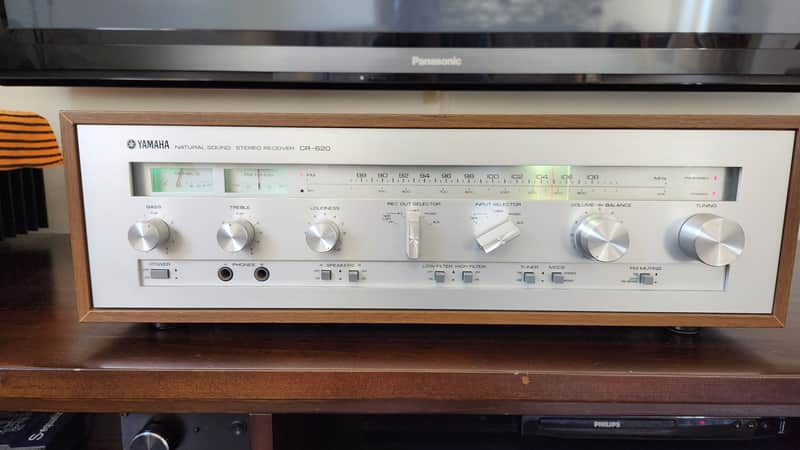
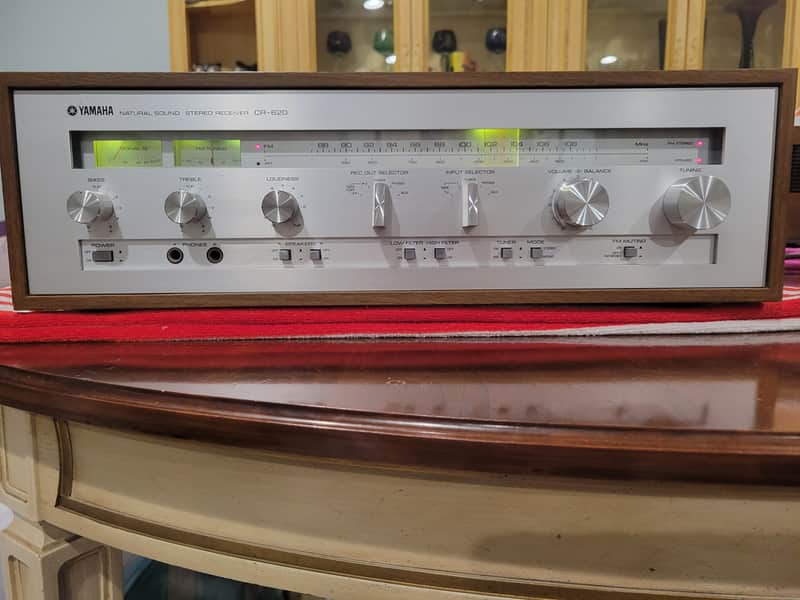
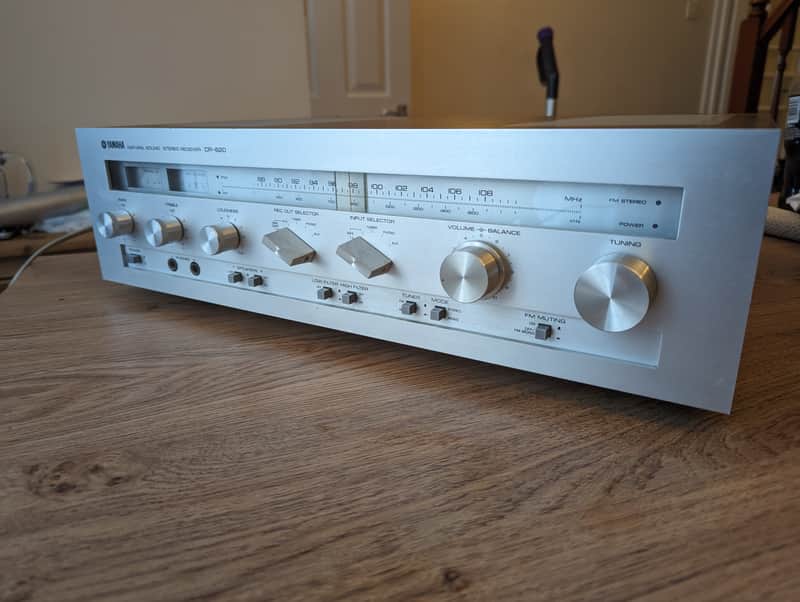
Videos:youtube.com/watch?v=EiAmxklKnLA&list=PL1IPBYrMbx5Bbv-tylLe_wP9jGfgN6803&index=3youtube.com/watch?v=M8Eifhz2tqM&list=PL1IPBYrMbx5Bbv-tylLe_wP9jGfgN6803&index=2youtube.com/watch?v=oaVuwciV7e4&list=PL1IPBYrMbx5Bbv-tylLe_wP9jGfgN6803&index=1This beautiful receiver came from a local estate sale. It had some limited dust but was in immaculate physical condition. It was not turning on because of a failed smaller capacitor in the power supply circuitry. Once I replaced it, it started operating.It has very few hours of operation because everything inside and out was physically impeccable. No discoloration, no smell, and it looked like new after cleanup. I could tell it had been maintained, not because I could tell from the cabinet mounting screws, but because the power output transistor had been repacked with thermally conductive grease not too long ago.All switches and potentiometers were working properly, the speaker protection relay tested perfect (it looked like new), but some of the light bulbs were dead as expected.This is a summary of the work I did (details are further below):- Detail cleaning- Cleaning and lubrication of switches and potentiometers with appropriate fluids- Replaced and upgraded many components that affect reliability and longevity- Replaced power cable with 3-prong outlet- Addition of power relay and soft start circuitry- Replacement of light bulbs with 3-color LEDs and circuitry to select color combination.- Thorough testing (including adjustment of amplifier idle currents)Here are details:Cleaning:The cabinet and the chassis were cleaned and degreased. The faceplate was disassembled and cleaned including the glass both sides. The component side of the PCB was dusted and the back was washed with isopropyl alcohol to remove most of the flux residues.All switches were cleaned with CRC electronic cleaner and then protected from oxidation with DeoxIT D100L. All potentiometers were cleaned and lubricated with DeoxIT Fader F5.The amplifier power transistors were disassembled, cleaned and repacked with DC 340 thermally conductive Silicone grease. The power transistor on the power supply was also repacked with grease and a second heat sink was added to reduce its operating temperature.Finally, the RCA jacks were polished to a shiny finish to restore the electrical conductivity.Components replaced:The 2 power supply main capacitors (6800uF) were replaced with 10,000uFAll electrolytic capacitors (77 plus the 2 power supply caps) were replaced with higher quality types from reputable brands. Capacitors with values 4.7uF and below were replaced with WIMA MKS metalized polyester capacitors. Decoupling polypropylene capacitors were added in parallel with most electrolytic capacitors to improve high frequency performance.22 small transistors which are prone to defects or failure were replaced with modern equivalents.2 zener diodes (12V) were replaced.The 2 trim potentiometers used to adjust the amplifier bias currents were replaced with multi-turn types.Upgrades:The AC main cable was replaced with a modern 3 prong plug that includes the fuse (which was previously internal). The earth ground pin is now connected to the chassis. The power cable is supplied with this receiver.Two relays and a 50 Watt resistor were added for powering it ON, to save on the power switch life and to limit the startup surge current (slow start). See my YouTube video of this circuit for details.The light bulbs (for the VU-meters and the tuning dial pointer) were replaced with 3 color LEDs and special circuitry that allows to adjust the color combination across a wide spectrum. I adjusted it close to the original bluish green but you can change that. Shades from white to yellow, orange, red, pink, purple, blue, and green can be obtained as there is a trim potentiometer to adjust the current for each LED color. The circuit is inside as shown on pictures and videos.Testing:I checked all power supply voltages.Amplifier bias currents were adjusted to within original specifications (9mV at test points).I tested the RIAA (phono) preamplifier for linearity with my passive reverse RIAA circuit and sine wave generator.I checked the frequency response on Aux, the functionality of the volume, balance, loudness, filters, and tone controls.I checked the amplifier power on 8 and 4 ohm loads.I checked the tuners (AM and FM) and the functionality of the VU-Meters. I checked the alignment of the tuning dial pointer.I checked it on music and it sounds great. See the video.The receiver performed very well during all these tests.Notes:I typically replace electrolytic capacitors 4.7uF and below with WIMA MKS metalized polyester capacitors (small orange capacitors on the component side of the PCBs). I also decouple all critical electrolytic capacitors (especially in the signal path) with polypropylene capacitors (see the brown capacitors on the back of the PC boards). This ensures the best performance at high frequencies. All the new electrolytic capacitors I use are of audio or power supply (function of where they are used) of reputable brands, typically Nichicon, Nippon Chemicon, Panasonic, etc.Several transistors made in the 1970’s are prone to issues and failures with time: Popping noise, drift, low gain, black plague (silver oxide), to name a few. These models are known (listed on the web) and there are modern substitutes. I did replace all transistors on this list.I do this work as a hobby. I try to buy the best vintage audio devices with the best cosmetics and low hours, and try to make them better than new, more reliable, and better sounding. Then I resell them. I do not do this type of work for others. If I had to count my time, the cost would be prohibitive.Enjoy the videos!

Our Thoughts RADAR AI

Generating expert take…

About Yamaha

Yamaha stands as one of the world's most storied audio manufacturers, with roots extending far beyond consumer electronics. Founded in 1887 by Torakusu Yamaha in Hamamatsu, Japan, the company began as a reed organ manufacturer before expanding into pianos and eventually becoming a comprehensive musical instrument maker. This deep heritage in acoustics and materials science would prove foundational to its later audio ventures. The company operated under its original name, Nippon Gakki Co., Ltd., until 1987, when it was renamed Yamaha Corporation in honor of its centennial.

Yamaha's entry into high-fidelity audio proved transformative for the industry itself. In 1954, the company released the Yamaha Hi-Fi Player, widely recognized as the world's first audio component to bear the "Hi-Fi" designation in its name. The company subsequently built a comprehensive product portfolio spanning amplifiers—beginning with the acclaimed A-100 in 1960—speakers, turntables, and digital audio equipment. The NS-1000 speakers, introduced in 1974 with beryllium drivers, became iconic reference monitors. Yamaha also pioneered digital audio technology, shipping the world's first CD recorder in 1988.

Today, Yamaha occupies a distinctive position as a mid-to-high-end generalist rather than a niche specialist. The brand commands respect among both casual listeners and serious audiophiles, balancing accessibility with genuine engineering credibility. Its reputation rests on six decades of consistent innovation, proven reliability, and the unique advantage of applying musical instrument expertise to audio reproduction. Vintage Yamaha components remain highly sought by collectors, while current products maintain the brand's tradition of delivering performance and durability across multiple price tiers.


See all Yamaha listings on RADAR.

More CR-620 listings