# SAE (Scientific Audio Electronics)
Scientific Audio Electronics emerged from Los Angeles in 1968 when Morris Kessler partnered with Ted Winchester and Beth Winchester to pursue an ambitious goal: building the world's finest audio amplifier. Kessler had been designing and hand-building amplifiers since the early 1960s, and the partnership formalized his vision into a commercial enterprise. The company operated through the 1980s, establishing itself as a significant player in the golden age of solid-state hi-fi before ceasing operations in 1988.
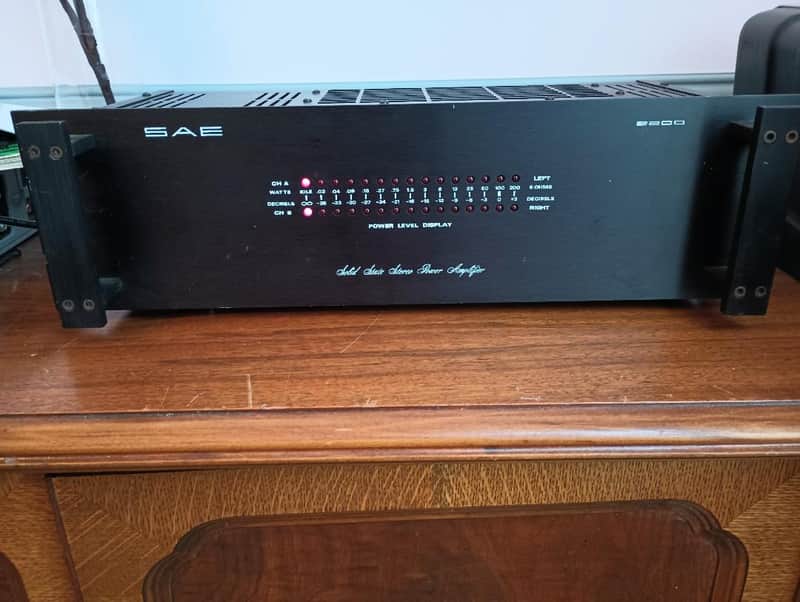
SAE built its reputation almost exclusively on power amplifiers, introducing the Mark 2—a 60-watt solid-state design that earned comparison to the legendary Marantz Model 9 tube amplifier in Stereophile magazine. Beyond amplifiers, the company pioneered several audio innovations, including the world's first graphic equalizer, the first digital read-out tuner, and the first phonograph pop-and-click filter. These products reflected SAE's engineering-forward philosophy and commitment to advancing high-fidelity technology.
SAE occupies a revered position in vintage hi-fi collecting and audio history. During the 1970s, the company was synonymous with high-end solid-state amplification, competing directly with established names like McIntosh, Marantz, Pioneer, and Sansui. Their equipment commanded premium pricing—a complete SAE rack system retailed for $6,000, equivalent to a top-tier Cadillac. Today, SAE remains a collector's brand, remembered by audiophiles as a legitimate innovator that produced musically open and refined components during hi-fi's most formative era.