LIVE
Waiting for new listingsโ€ฆ
0 other audiophiles online

Seller's Description

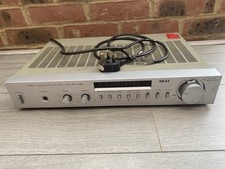
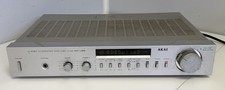
Amplificatore integrato vintage, ๐ฉ๐ž๐ซ๐Ÿ๐ž๐ญ๐ญ๐š๐ฆ๐ž๐ง๐ญ๐ž ๐Ÿ๐ฎ๐ง๐ณ๐ข๐จ๐ง๐š๐ง๐ญ๐ž, costruito in Giappone nei primi anni '80. E' stiloso, essenziale, con i suoi inconfondibili wu meter a led di colore rosso.... Ha qualche segno da spostamento sulla parte superiore ma il frontale รจ ancora in ๐จ๐ญ๐ญ๐ข๐ฆ๐ž ๐œ๐จ๐ง๐๐ข๐ณ๐ข๐จ๐ง๐ข ๐ž๐ฌ๐ญ๐ž๐ญ๐ข๐œ๐ก๐ž. Come suona? Per la mia sessione di ascolto ho utilizzato un giradischi Yamaha/Pickering, lettore cd vintage Yamaha, casse acustiche vintage ESB e diffusori Vivid Audio. Amplificatore di riferimento: NAD 3020 E' un ampli che non cerca analicitร  clinica o iper dettaglio, la sua timbrica รจ caratterizzabile come calda, rotonda, velata in gamma alta. La gamma bassa รจ presente e generosa. La gamma media รจ il suo punto di merito. Le voci e le chitarre acustiche vengono riprodotte con una piacevole corpositร , unita a grande pulizia, rendendo l'ascolto mai affaticante anche per lunghe sessioni.La scena sonora รจ buona, cosรฌ come la separazione stereofonica. Bene la profonditร . Passando alla dinamica, per trovare il limite, bisogna andare su brani orchestrali particolarmente complessi o un rock molto denso e duro ma, a volumi condominiali normali, il comportamento รจ energico e ritmico. Per chi รจ adatto? E' un'ottima soluzione per un primo impianto audio stereo hi-fi entry level, per un secondo impianto o per chi vuole entrare per la prima volta nel magico mondo del vinile, grazie ad una valida sezione Phono.Caratteristiche Tecniche: - Potenza 25 watt per canale su 8 Ohm - Risposta in frequenza 20Hz - 20kHz - T.H.D. 0.05% - Sensibilitร  ingressi 3mV (Phono MM), 150mV (Linea) - Rapporto segnale/rumore 80dB (Phono MM), 95dB (Linea) - Impedenza diffusori 4 - 16 Ohm - Dimensioni (L x A x P) 44 x 7,8 x 29 cm - Peso 5.6 kg NON SPEDISCO. Solo ritiro a mano (Milano Sud) previo visione e ascolto con pagamento all'atto del ritiro. Astenersi cortesemente perditempo, indecisi e inconcludenti. Ti ringrazio per l'attenzione e... Good Vibrations! ๐Ÿ”ŠP.S. tra i miei annunci (attuali e futuri), puoi trovare altri componenti hi-fi interessanti

Our Thoughts RADAR AI

US$115 is right at the top of fair market for this one, basically sitting on the 75th percentile of the recent comps, so itโ€™s not a bargain but it isnโ€™t out of line either. With a median of US$105 and a 25th percentile of US$93, this reads as a fair ask only if the unit is clean, fully working, and nicely preserved.

The appeal here is the usual Akai vintage charm: a compact integrated amp with a straightforward layout, solid Japanese-era build, and enough power for efficient speakers or a second system. At this price, the buy gets much stronger if it includes original knobs, intact lettering, and proof itโ€™s been serviced or at least tested well; age-related issues like scratchy controls or tired switches are the main things to watch.

Independent perspective โ€” not a price guarantee. Always verify condition, accessories and provenance before purchase.

About Akai

Akai Electric Company Ltd. traces its origins to Japan, founded by engineer Masukichi Akai in Tokyo around 1929, with his son Saburo Akai playing a key role in its early growth. Initially focused on affordable radio components, the firm formalized as a full electronics manufacturer post-World War II, often cited as 1946. By the mid-20th century, Akai had evolved into a prominent name in consumer audio, peaking in the 1970s before financial troubles led to its exit from the industry in 1991.

The brand built its legacy on high-quality tape-based audio gear, including reel-to-reel tape recorders, cassette decks, tuners, amplifiers, and complete stereo systems that brought professional-grade sound to homes. In the late 1980s, Akai Professional revolutionized music production with the MPC seriesโ€”starting with the 1988 MPC60, co-designed by Roger Linnโ€”integrating sampling, sequencing, and velocity-sensitive pads into compact workstations that defined hip-hop and electronic genres.

Today, Akai holds a revered vintage-collector status among hi-fi enthusiasts for its robust 1970s components, prized for their warm analog character and build quality. In the pro audio realm, the MPC line endures as an iconic, mid-to-high-end tool for beatmakers, with modern iterations sustaining the brand through licensing. While not a current leader in traditional hi-fi like amplifiers or speakers, its heritage appeals to savvy buyers seeking timeless reliability over fleeting trends.


See all Akai listings on RADAR.

More AM-U22 listings