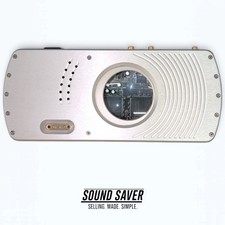
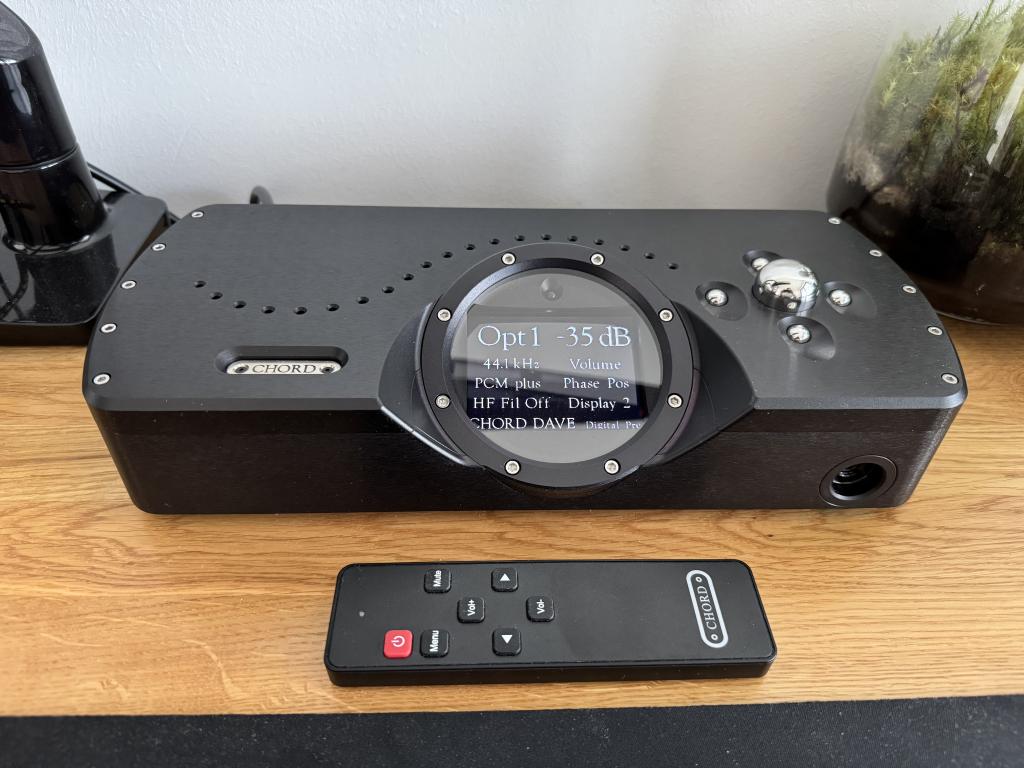
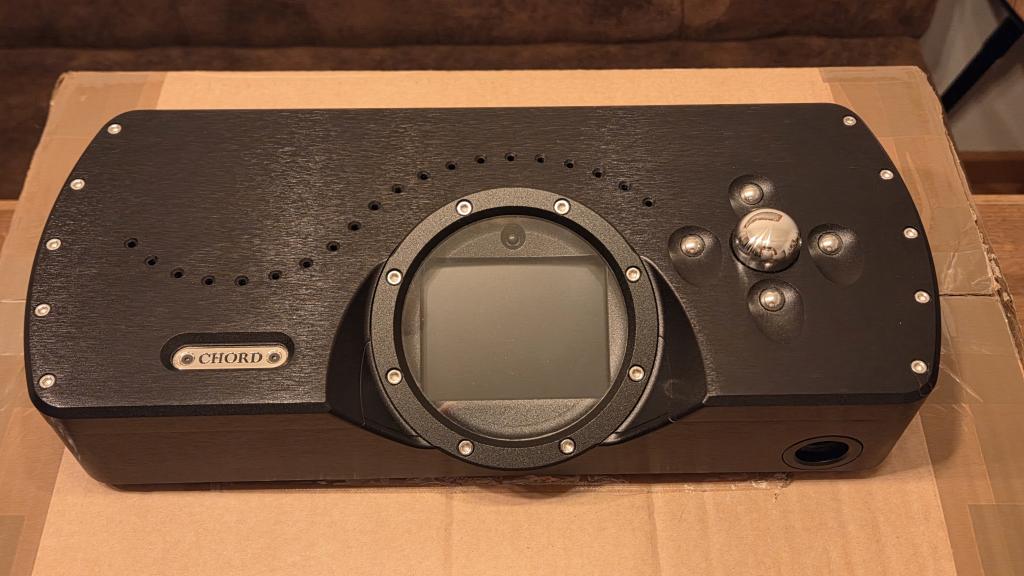
We have acquired a beautiful Chord DAC64 Mk2 DAC in good condition from its original owner.
This was a DAC that was highly sought after and extremely cutting edge in design when it was released. A warm and smooth sounding DAC
To help avoid multiple emails regarding the Mk I vs Mk II .
Chord never labelled the units differentiating them and the key difference are as follows:
The MkII has a power switch on the back, has one extra BNC digital input and some extra capability for older transports with high jitter problems.
Apart from that there doesn't appear to be any sonic difference between them.
This Chord DAC64 Mk2 comes with the clear perspex stand as seen in the photos.
This unit does not have the original box or manual.
If you require shipping then we strongly recommend contacting us before buying to get a quote for packing and freight costs.
Here is the Guff,
Chord is introducing a number of new digital products using advanced technology features. Chord Electronics is the first company in the World to use this exciting new technology, which provides groundbreaking performance. The DAC64 is the first model to be introduced with this technology and features a radically new type of filter called the Watts Transient Aligned filter (WTA); improved fourth generation Pulse Array DAC; 64 bit filter and DAC architecture; and a new all digital DAC receiver chip.
WTA Filter
The WTA filter algorithm has taken twenty years of research to develop. It solves the question as to why higher sampling rates sound better. It is well known that 96 kHz (DVD Audio) recordings sound better than 44.1 kHz (CD) recordings. Most people believe that this is due to the presence of ultrasonic information being audible even though the best human hearing is limited to 20kHz. What is not well known is that 768 kHz recordings sound better than 384 kHz and that the sound quality limit for sampling lies in the MHz region. 768 kHz recordings cannot sound better because of information above 200 kHz being important – simply because musical instruments, microphones, amplifiers and loudspeakers do not work at these frequencies nor can we hear them. So if it is not the extra bandwidth that is important, why do higher sampling rates sound better?
The answer is not being able to hear inaudible supersonic information, but the ability to hear the timing of transients more clearly. It has long been known that the human ear and brain can detect differences in the phase of sound between the ears to the order of microseconds. This timing difference between the ears is used for localising high frequency sound. Since transients can be detected down to microseconds, the recording system needs to be able to resolve timing of one microsecond. A sampling rate of 1 MHz is needed to achieve this!
However, 44.1 kHz sampling can be capable of accurately resolving transients by the use of digital filtering. Digital filtering can go some way towards improving resolution without the need for higher sampling rates. However in order to do this the filters need to have infinite long tap lengths. Currently all reconstruction filters have relatively short tap lengths – the largest commercial device is only about 256 taps. It is due to this short tap length and the filter algorithm employed that generates the transient timing errors. These errors turned out to be very audible. Going from 256 taps to 1024 taps gave a massive improvement in sound quality – much smoother, more focused sound quality, with an incredibly deep and precise sound stage.
The initial experiments used variations on existing filter algorithms. Going from 1024 taps to 2048 taps gave a very big improvement in sound quality, and it was implying that almost infinite tap length filters were needed for the ultimate sound quality. At this stage, a new type of algorithm was developed – the WTA filter. This was designed to minimise transient timing errors from the outset, thereby reducing the need for extremely long tap lengths. The WTA algorithm was a success – a 256 tap WTA filter sounded better than all other conventional filters, even with 1024 taps. WTA filters still benefit from long tap lengths; there is a large difference going from 256 taps to 1024 taps.
The new Chord products using WTA filters all start with 1024 taps. The filters are implemented in FPGAs (Field Programmable Gate Arrays) using a specially designed 64-bit DSP (Digital Signal Processing) core.
Fourth Generation Pulse Array DAC
Pulse Array as a DAC technology has been universally praised for its outstanding natural sound quality. The fourth generation builds on this success; it employs 64 bit, 7th order noise shaping; 2048 times oversampling rates and improved pulse width modulated elements. These refinements give much better measured performance; better detail resolution with a smoother more focused sound quality.
64 Bit DAC and Filter
All filters generate higher output bit data widths – for example 16-bit input multiplied by 16-bit coefficient generates a 32-bit output. All conventional filters truncate the output by discarding bits – however, this discarding may lose information. By using a 64-bit filter and DAC architecture, there is no possibility of degrading the sound quality. 64-bit architecture becomes a very big advantage when digital volume controls are used as no loss of detail or degradation is possible.
Digital Receiver Chip
The receiver chip takes the SPDIF or AES/EBU data and generates clocks and data in a form that the filter can accept. The new chip has two major benefits – all digital data extraction and a RAM buffer (a RAM buffer sequentially takes in all the data, re-times, it then sends it out). The all-digital extraction is error tolerant – it can accept multiple edges, which often happens in noisy environments, without generating errors. The RAM buffer allows a jitter free local clock operation without needing to send back a clock signal to the data source.
All of the above innovations are implemented in Xilinx Virtex series FPGA’s. These FPGA’s offer 200,000 gates per device, and merely updating the EPROM memory chip can easily change the design, thus future proofing is assured.