BETA
RADAR is in beta — expect errors. Accuracy and coverage improvements are shipping daily.
LIVE
Waiting for new listings…
0 other audiophiles online

Seller's Description

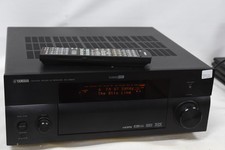
Yamaha RX-V2600 AV Receiver One owner from new.  Came from a pet and smoke free environment.   Only issue is some backlit on remote buttons not working. Remote still function.   130watts/channel (20Hz - 20kHz, 0.04% THD, 8-ohms) - see our bench test for more on power Updated GUI interface Burr-Brown 192 kHz/24-bit DACs for all channels Assignable amplifiers for bi-amp connection 2 in/1 out HDMI interface for high quality digital audio and video data handling Fully analogue video up-conversion to HDMI and component video Output with TBC (time-base-correction) De-interlacing (480i to 480p) Up-sc

Our Thoughts RADAR AI

Against your own recent AUD comps, A$400 is well below the A$512 25th percentile and far under the A$618 median, so this reads as a strong bargain if you’re buying it as a project or donor unit rather than a plug-and-play receiver. It is not an ambitious ask; it is priced on the low side of the market.

The upside is the usual Yamaha advantage: these older RX-V receivers were generally solid, feature-rich home-theatre workhorses with decent amplifier heft and good usability when healthy. For a for-parts unit, the appeal is mainly as a repair candidate, parts source, or bench test platform; if you have the skills or need specific boards, that can make A$400 reasonable. The main caveat is straightforward: the price only makes sense if you specifically want a non-working receiver, because age-related faults in this class can be time-consuming to chase.

Independent perspective — not a price guarantee. Always verify condition, accessories and provenance before purchase.

About Yamaha

Yamaha stands as one of the world's most storied audio manufacturers, with roots extending far beyond consumer electronics. Founded in 1887 by Torakusu Yamaha in Hamamatsu, Japan, the company began as a reed organ manufacturer before expanding into pianos and eventually becoming a comprehensive musical instrument maker. This deep heritage in acoustics and materials science would prove foundational to its later audio ventures. The company operated under its original name, Nippon Gakki Co., Ltd., until 1987, when it was renamed Yamaha Corporation in honor of its centennial.

Yamaha's entry into high-fidelity audio proved transformative for the industry itself. In 1954, the company released the Yamaha Hi-Fi Player, widely recognized as the world's first audio component to bear the "Hi-Fi" designation in its name. The company subsequently built a comprehensive product portfolio spanning amplifiers—beginning with the acclaimed A-100 in 1960—speakers, turntables, and digital audio equipment. The NS-1000 speakers, introduced in 1974 with beryllium drivers, became iconic reference monitors. Yamaha also pioneered digital audio technology, shipping the world's first CD recorder in 1988.

Today, Yamaha occupies a distinctive position as a mid-to-high-end generalist rather than a niche specialist. The brand commands respect among both casual listeners and serious audiophiles, balancing accessibility with genuine engineering credibility. Its reputation rests on six decades of consistent innovation, proven reliability, and the unique advantage of applying musical instrument expertise to audio reproduction. Vintage Yamaha components remain highly sought by collectors, while current products maintain the brand's tradition of delivering performance and durability across multiple price tiers.


See all Yamaha listings on RADAR.

More RX-V2600 listings