BETA
RADAR is in beta — expect errors. Accuracy and coverage improvements are shipping daily.
LIVE
Waiting for new listings…
0 other audiophiles online

Seller's Description

Specifications

Type: Mono/Stereo Tuner

Tuning Bands: FM, MW

Tuning Scale: Analogue

FM Tuning Range: 88 to 108 MHz

MW Tuning Range: 525 to 1605 kHz

Sensitivity: 1.9uV (FM), 20uV (MW)

Signal to Noise Ratio: 70dB (FM), 50dB (MW)

Distortion: 0.4% (FM), 0.9% (MW)

Selectivity: 60dB (FM), 35dB (MW)

Frequency response: 30Hz to 15kHz (FM)

Output: 700mV (FM), 150mV (MW)

Dimensions: 380 x 140 x 255mm

Weight: 5.3kg

Year: 1976


Repair:

Align FM stations

2 replacement lamps

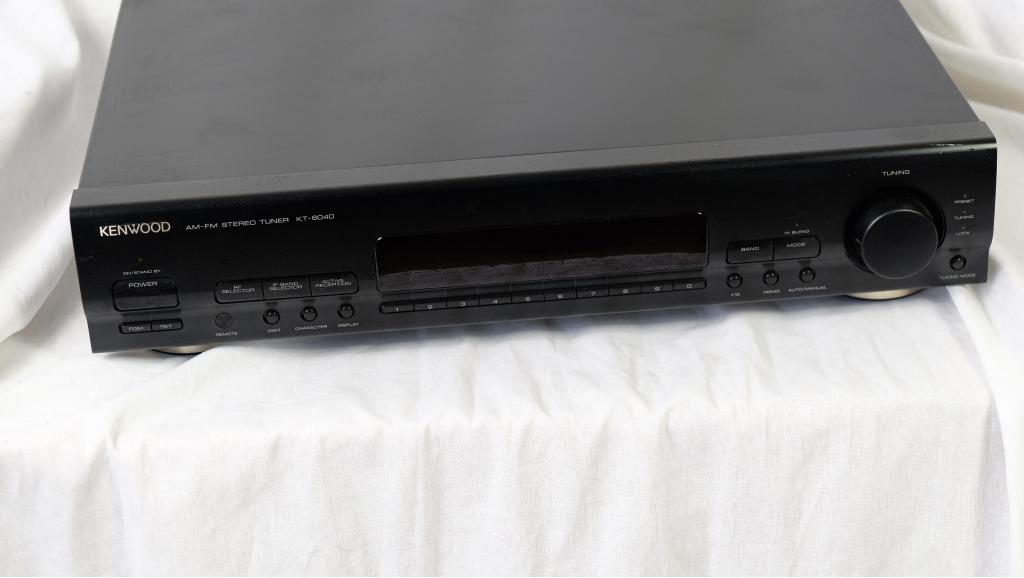
Unit is missing a switch knob

Cleaned and Serviced

#232

Our Thoughts RADAR AI

At USD $175 for a Kenwood KT-5300, you're looking at a fair-to-slightly-optimistic ask. These solid 1970s tuners typically move in the USD $80–150 range on the used market depending on condition; one dealer listing shows "very good" cosmetic condition at a comparable price point, suggesting USD $175 is on the higher end but not outrageous if the unit is genuinely clean and fully functional. The KT-5300 is honest gear—nothing fancy, but it delivers respectable FM performance (1.9µV sensitivity, 70dB S/N ratio) and pairs well with period Kenwood amplifiers. The real question is whether this particular example justifies the premium.

Before committing, verify that all tuning functions engage smoothly and that the dial lights work without excessive brightness (some users report overly bright backlighting as a minor annoyance). Given the tuner's age—nearly 50 years old—confirm the capacitors haven't drifted and that FM reception is clean and stable across the band; a snowy or unstable signal suggests recapping work ahead. Ask the seller for proof that it's been recently serviced or at minimum powered up and tested, and confirm the original power cord and any documentation are included.

Independent perspective — not a price guarantee. Always verify condition, accessories and provenance before purchase.

About Kenwood

Kenwood traces its origins to December 21, 1946, when it was founded as Kasuga Radio Co. Ltd. in Komagane City, Nagano Prefecture, Japan, by a group of entrepreneurs led by William "Bill" Kasuga. Emerging in the postwar era, the company initially produced electronic components and amateur radio gear, renaming to Trio Corporation in 1960 before adopting the Kenwood name in 1986 to appeal to Western markets—blending "Ken," a familiar name across Japan and America, with "Wood" evoking durability and Hollywood. This rebranding fueled rapid international growth, starting with a U.S. office in Los Angeles County in 1963.

The brand built its legacy on high-quality audio and communications equipment, excelling in home hi-fi amplifiers like the acclaimed 1970 Supreme 1 multichannel model, receivers, tuners, and speakers with innovations such as polypropylene cones. Kenwood also pioneered car audio systems, including the first audio/video amplifier for home theater in 1981 and anti-theft cassette decks, alongside professional two-way radios and amateur transceivers. While maintaining roots in consumer electronics, it expanded into automotive infotainment.

Today, as part of JVCKENWOOD since the 2008 merger with JVC, Kenwood holds a solid mid-tier position in car audio and professional communications, prized by enthusiasts for reliable performance and aftermarket upgrades. Its vintage home hi-fi gear from the 1970s and 1980s commands respect among collectors for robust build and warm sound, though it no longer dominates pure hi-fi markets.


See all Kenwood listings on RADAR.

More KT-5300 listings