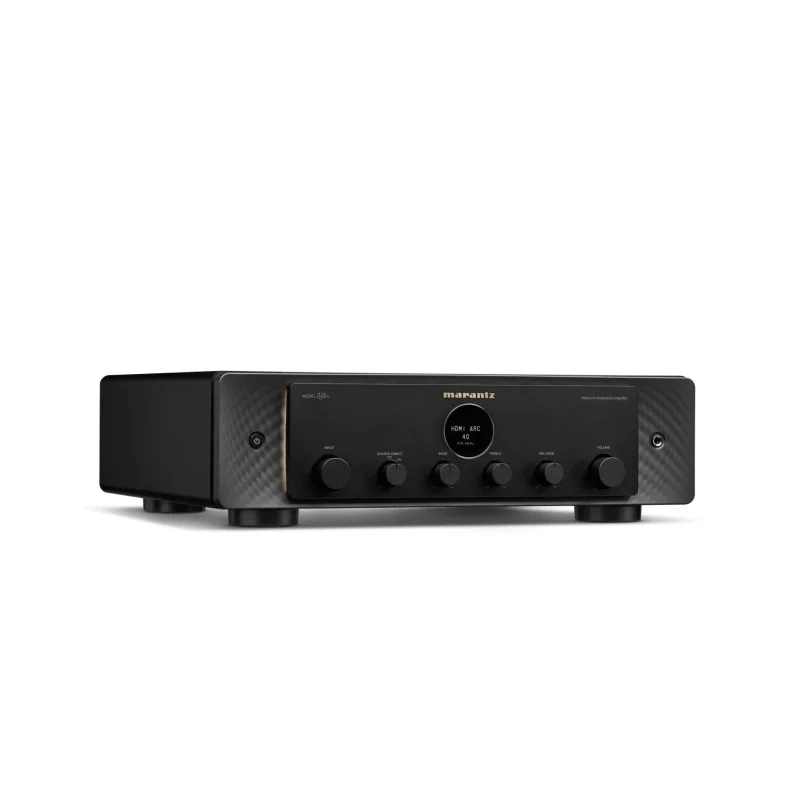
Marantz SR880 MK2II
- Location
- US
- Seller
- Just Audio HiFi
- Source
- Just Audio HiFi Dealer
- Posted
- 13 Feb 2026
- Last seen
- 1h ago
RADAR is a price search engine. We link to the original listing — we never sell direct. Transactions happen on the source site.
Specifications:
Tuning range: FM, MW
Power output: 110 watts per channel into 8Ω (stereo)
Surround output: 110W (front), 110W (center), 75W (rear)
Frequency response: 20Hz to 20kHz
Total harmonic distortion: 0.05%
Input sensitivity: 210mV (line)
Signal to noise ratio: 82dB (line)
Speaker load impedance: 8Ω (minimum)
Digital inputs: coaxial, optical
Video Connections: composite, S-video
Dimensions: 439 x 158 x 458mm
Weight: 14.5kg
Accessories: RC880SR/2000 remote control
Year: 1997
Repair:
9 Replacement Capacitors
Adjusted Bias
Cleaned Controls
Clean Switches
Soldered Circuit Board
#45590
A late-90s Marantz receiver like this has real vintage charm: solid build, warm voicing, and enough muscle to make it appealing for classic surround or music-first systems. At US$299, the asking price is fair to slightly strong for an unknown-condition older AVR; it’s not an obvious bargain, but it is within the range a clean, working example can justify.
What makes it worth a look is the Marantz flavor and the fact that these older units can still be very satisfying with efficient speakers and simpler home-theater setups. The upside is strongest if it’s been gently used, fully functional, and comes with the remote and original paperwork; the downside on a piece this age is mostly maintenance risk, so a clean demo and all inputs working matter more than cosmetic perfection.
Independent perspective — not a price guarantee. Always verify condition, accessories and provenance before purchase.
Marantz originated in the United States, founded in 1953 by Saul Bernard Marantz, a music enthusiast and amateur musician born in Brooklyn in 1911. Dissatisfied with the audio equipment of the era, he crafted the groundbreaking Audio Consolette preamplifier in 1952 from his New York home, selling the first 100 units rapidly and prompting the formal establishment of the company in Woodside, Queens. Though production later shifted to Japan in partnership with manufacturers like Standard Radio in 1966, and the brand evolved through ownership changes including Superscope and eventual integration into larger groups, its heritage remains rooted in American ingenuity and a relentless pursuit of musical fidelity.
The brand excels in high-end audio components, particularly amplifiers, preamplifiers, and integrated systems that defined its golden era. Iconic models like the Model 7 preamplifier (1958), Model 9 power amplifier (1960), and Model 10B tuner (1964) set benchmarks for performance, while later offerings expanded to tuners, receivers, and CD players. Marantz briefly ventured into speakers under designer Ed May in the 1970s but focused primarily on electronics rather than turntables, headphones, DACs, or cables, emphasizing separates renowned for their "Most Musical Sound."
Marantz commands a premium position in the hi-fi market, revered as a high-end pioneer that shaped the audiophile landscape through the 1970s zenith. Today, it blends vintage allure with modern elegance, appealing to discerning buyers who value durability, innovation, and warm, detailed sound signatures over mass-market accessibility.

See all Marantz listings on RADAR.