WEISS DSP502 - Audio Processor & Network Renderer - NEW!
- Location
- US
- Source
- Reverb
- Posted
- 2 Nov 2023
- Last seen
- 9h ago
RADAR is a price search engine. We link to the original listing — we never sell direct. Transactions happen on the source site.
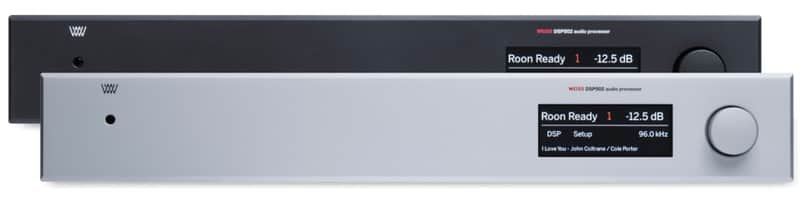
PLEASE CHECK AVAILABILITY BEFORE CONFIRMING YOUR PURCHASE! Our stock can change any minute – we sell through various sales channels.Brand New! – Closed Box. We are authorised dealers of the finest audio gear and musical instruments.Note 1: Free shipping within EU. If outside EU, please message us for specific shipping price to your particular location. The price you see is only a generic estimation for “outside EU”.Note 2: This product is custom ordered, please check availability and/or eventual shipping delay.Note 3: We sell without taxes anywhere outside Europe and to valid VAT ID companies inside Europe. Please ask us your price without Tax in those cases.Note 4: We can quote any kind of bundle with our products at the most convenient prices. Just ask for it.WEISS AUDIO DSP502 – AUDIO PROCESSOR, AND NETWORK RENDERERMAKE GOOD SOUND EVEN BETTERUse the DSP502 to improve room acoustics and fine-tune loudspeakers’ frequency response. Or take things further and enhance less-than-perfect recordings to your taste. Reduce sharp sibilants, add creative EQ, emulate vinyl sound on digital recordings, and experience the magic of crosstalk canceling.The DSP502 is a digital signal processor which treats the audio using the same quality algorithms that made Weiss Engineering’s professional line of products indispensable tools in sound studios worldwide.MAIN FEATURESCORRECTIVE PROCESSINGVery few listening environments are acoustically perfect. This means that no matter how great your hi-fi setup is, the resulting playback will be compromised by the room’s characteristics.This can be significantly improved with the Room EQ algorithm included in the DSP502. Use it to suppress unwanted room modes and achieve a clearer, truer representation of your audio.MAKE GOOD SOUND BETTERThe DSP502 can also be used to correct less-than-perfect recordings and even get a bit creative!Use the De-esser to reduce sharp “s” and “t” sounds in vocals, make a recording darker or brighter with creative EQ, emulate vinyl sound on digital recordings, and experience the magically wide stereo image that can be achieved using the included crosstalk canceling algorithm.PROCESS LIKE THE PROSThe audio processing in the DSP502 is based on the same trailblazing algorithms that are used in Weiss Engineering’s professional audio tools.So with the DSP502, you can adjust the audio using the same professional-grade algorithms that were likely used to mix and master the original recording.DSP501 PRODUCT COMPARISONThe DSP501 is the compact-size version of the DSP502. The two units offer the exact same feature set and quality. The only difference is the enclosure size.The DSP501/502 have all the audio processing features of the DAC501 and DAC502, but without the D/A conversion. They are ideal in setups with active speakers that already have built-in D/A conversion.EASE OF USEThe DSP502 comes with an IR remote control which can be used to select the active input and output, the DSP audio processing presets, and switch power on and off.Furthermore, it is possible to control and configure the DSP502 via a web browser, which adds detailed control of the DSP processing and preset management.TECHNICAL DATADIGITAL INPUTSThere are a total of five inputs:AES/EBU or S/PDIF via XLR, Toslink, and RCA sockets.UPnP/DLNA via Ethernet.USB.Roon Ready.Accepted formats: PCM 44.1kHz up to 384 kHz, DSD 64x / 128x.Future formats can be accommodated via software updates.DIGITAL OUTPUTSTwo S/PDIF outputs on RCA connectors.Two AES/EBU outputs on XLR connectors.Up to four audio channels (two stereo channels) are supported. One way of using this would be to connect two different D/A converters, one for speakers and one for headphones. As the two outputs have independent DSP processing, you could in the above use case apply Room EQ to the speaker output, but not to the headphones.The output levels can be set in a coarse manner to adapt the output to the D/A Converter / Amplifier chain. In addition, the output levels can be set in fine steps for normal level control.DIGITAL SIGNAL PROCESSINGThe DSP502 uses a built-in digital signal processing (DSP) chip for its audio processing. These algorithms are included:Room Equalizer – to suppress room modes for more accurate bass reproduction.Creative Equalizer – a tone control with low boost/cut, high boost/cut, and mid boost/cut. Very useful to correct those recordings which do not quite sound right.De-Essing – the automatic removal of overly bright sibilances from human voices. The sibilance effect can be more or less pronounced depending on your speakers or room acoustics.Constant Volume – adjusts the audio volume (loudness) to a constant value across all tracks played. Useful for “party mode” when the volume control should stay untouched.Vinyl Emulation – get that special sonic character of a record player based playback chain. We also employ an emulation of the DMM-CD procedure offered by the Stockfisch label.Crosstalk Cancelling (XTC) – for the playback of dummy head recordings or live recordings via speakers for an incredible live sensation. Dummy head recordings usually are listened to via headphones because they only work properly if the left channel goes to the left ear only and the right channel to the right ear only. With speakers, this is difficult to achieve as the left channel goes to the left and the right ear. But with some clever signal processing of the speaker channels is possible to suppress the crosstalk, i.e. the audio going from the left speaker to the right ear and vice versa. If that works properly then the recording sounds as if one would be in the space where the recording has taken place. All the reverberation and 3D representation of the sound sources are there. (For speaker-based playback only.)Loudness Control – a listening volume-dependent equalization of the audio.Headphone Equalizer – to adapt any headphone to the listener’s ears in terms of frequency response.Crossfeed – to emulate a speaker-based playback impression on headphones.FRONT PANEL CONTROLSA rotary encoder knob for changing parameters and for powering the unit on/off.A touch screen colour LCD display.An IR receiver.BACK PANEL ELEMENTSDigital outputs on XLR and RCA connectors.Digital inputs on XLR, RCA, TOSLINK, USB, and Ethernet connectors.USB type-A connector for various applications.Mains connector with fuses.DIMENSIONSDSP502Depth: 30 cm / 11.8 inchesWidth: 45 cm / 17.7 inchesHeight: 6.6 cm / 2.6 inchesHeight with feet: 7.4 cm / 2.9 inchesIR Remote ControlDepth: 2.1 cm / 0.83 inchesWidth: 4.5 cm / 1.78 inchesHeight: 16.6 cm / 6.53 inchesPOWER SUPPLYA powerful non-switching power supply is used. All sensitive voltages have their own regulators which are separated between left and right channels. The result is an analog output free of “digital noise” and channel crosstalk.The power switch activates a semiconductor relay which only switches on or off at zero crossings of the mains voltage. This assures a glitch-free power switching. The two mains transformers are toroidal types.Mains voltage selection is done automatically by measuring the mains voltage before power is applied to the rest of the electronics.
Generating expert take…
Weiss Engineering was founded in 1985 by Daniel Weiss in Switzerland, near Zürich, following his five years at Willi Studer AG where he pioneered digital audio innovations like sampling frequency converters and processors for recorders. A self-taught electronics enthusiast who built his own synthesizers, amplifiers, and even an electric violin in his youth, Weiss established the company to specialize in digital audio equipment for mastering studios, launching the modular 102 Series that remains relevant today at 24-bit/96 kHz. This heritage in professional signal processing laid the foundation for the brand's precision engineering ethos.
The company focuses on high-end digital audio components, excelling in digital-to-analog converters (DACs), CD transports, streaming devices, preamplifiers, and integrated amplifiers, all designed and manufactured in-house by a small team of eight. Early products like the Gambit Series—featuring standalone equalizers, dynamics processors, de-noisers, and converters with 40-bit floating-point processing—targeted mastering engineers, while the 2000 expansion into hi-fi introduced audiophile favorites such as the MEDEA DAC and Jason CD transport, now staples in discerning home systems worldwide.
Weiss Engineering occupies a niche boutique position at the pinnacle of the high-end hi-fi market, revered for its Swiss-made transparency, ergonomic excellence, and unmatched digital fidelity among knowledgeable audiophiles and professionals. Daniel Weiss's 2021 Technical Grammy Award underscores its authoritative status in digital audio, appealing to buyers seeking reference-grade performance over mass-market compromises.

See all Weiss Engineeering listings on RADAR.