BETA
RADAR is in beta — expect errors. Accuracy and coverage improvements are shipping daily.
LIVE
Waiting for new listings…
0 other audiophiles online

Seller's Description

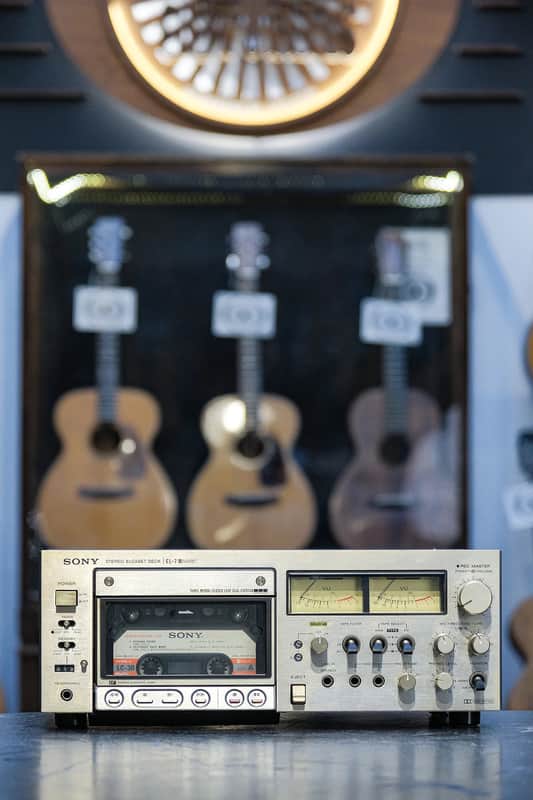
Very Good condition, 7/10, Made in Japan, no accessories included, more info: Sony's flagship for the big new format. Introduced by Sony in 1976, the Elcaset (taken from L-cassette, or ‘large cassette’) was intended to marry the performance of reel to reel with Compact Cassette convenience. The concept was similar to RCA’s Sound Tape Cartridge from nearly 20 years previously.The Elcaset used ¼-inch tape (double the width of Compact Cassette tape), and 3.75 inches per second (twice the speed) for better reproduction. The case was also larger (about three times the size of a Compact Cassette) and more rugged. The playback mechanism pulled the tape out of the case for more precise tracking across the head.The system was technically excellent, but a total failure in the marketplace, with a very low take up by a few audiophiles only. The performance of Compact Cassettes improved dramatically with the use of new materials such as chromium dioxide and better manufacturing quality, and for most people were adequate.No pre-recorded Elcaset tapes were produced and the machines were withdrawn from the market after only a few years.When Sony pulled the Elcaset from the market in 1980, the remaining equipment was sold off in Finland for bargain prices.We all know what became to ELCASET as a standard (and to its UNISETTE professional cousin) but the EL-7 is a very impressive beast : just like the EL tapes themselves, it is HUGE.The RM-30 wired remote-control itself looks and feels like a bar of solid gold. It ain't gold for sure but it could have been - if the EL format had been launched only a couple of years earlier.Available (sort of) in Germany as a Wega E4950 (black face of the shiny kind) and in Japan under the Lo-D (aka Hitachi) D-9000 moniker with looks being a sort of mix'n'match.Sony did produce a Japan-only version as well : EL-7B.The B stands for black but only EL-7 is written on the front plate like a regular silver EL-7.It is quite unfortunate Sony didn't export this B version for it is quite better looking - and looks also do matter if a product is to succeed, market-wise.The EL-5 only saw the original silver fashion.If specs do reach easily those of a good upper end reel-to-reel, they don't catch those of either a TC-880-2 - but EL recordings do sound largely superior to any Compact Cassette recorderManufacturer: SonyModel:EL-7Release Dates:1976 - 1979 Number Of Heads: 3Dimension: 6.7" X 18.1" X 12.6" 460 X 170 X 320mmHead Configuration: Stereo Head Composition: FerriteApplication: Consumer# Motors: 3 Voltage(S): 110-120vFrequency Response:15Hz To 27kHzWow And Flutter:0.04%Signal-To-Noise Ratio:67 DBSound Quality Rating:9 / 10Long-Term Reliability Rating: 8 / 10Belt Size: FRM 13.3 Speeds( I.p.s ): 3 3/4 Tape Width: 1/4”

Our Thoughts RADAR AI

Buyer Notes: 1970s Sony Stereo Elcaset Deck EL-7

The asking price of USD$1,854 is ambitious for this vintage deck, especially with condition listed as unknown—a red flag that should lower confidence immediately. Elcaset machines from this era typically trade in the USD$300–USD$800 range depending on working order and cosmetics; a pristine, fully functional example might reach USD$1,000–USD$1,200 at auction. Without documented proof of operation, this pricing sits well above fair market. The unknown condition tag suggests either the seller hasn't tested it or is hoping nostalgia will carry the sale. Compare this asking to your own database median of USD$220 for comparable used audio gear, and the gap widens considerably.

Before committing, demand a detailed condition report: does the transport mechanism engage smoothly, do both channels pass signal, and are the pinch rollers hardened (a common failure point in 50-year-old machines)? Verify that all original Elcaset cartridges or at least one working cartridge are included—blank tapes alone won't prove functionality. Have the seller run a test recording and playback over video call if possible. Elcaset was a niche format; parts and working examples are scarce, but that scarcity shouldn't justify guesswork pricing on an untested unit.

Independent perspective — not a price guarantee. Always verify condition, accessories and provenance before purchase.

About Sony

Sony emerged from the ruins of post-World War II Japan, founded on May 7, 1946, by Masaru Ibuka and Akio Morita as Tokyo Tsushin Kogyo K.K. in Tokyo's Nihonbashi district. Starting with radio repairs and Japan's first magnetic tape recorder, the duo secured transistor licensing from Bell Labs, pioneering the TR-55 transistor radio in 1955. Renamed Sony Corporation in 1958—from the Latin "sonus" for sound—the brand symbolized Japan's ascent from cheap imitations to innovative leadership, fueled by Ibuka's engineering prowess and Morita's global marketing vision.

Sony's hi-fi legacy spans headphones, amplifiers, speakers, turntables, and DACs, alongside landmark formats like the Compact Disc in 1982 and Blu-ray. Iconic products include the Walkman for portable audio revolution and Trinitron televisions, blending consumer accessibility with cutting-edge tech. Today, offerings like the Signature Series headphones and ES amplifiers target discerning listeners seeking refined soundstaging and dynamic range.

Positioned as a mid-to-high-end powerhouse, Sony commands respect among knowledgeable buyers for blending mass-market reliability with premium performance, outpacing many pure audiophile brands in innovation and value. Far from vintage relic or niche boutique, it dominates with forward-thinking engineering, holding strong market share in headphones and streaming ecosystems.


See all Sony listings on RADAR.

More Sony listings