BETA
RADAR is in beta — expect errors. Accuracy and coverage improvements are shipping daily.
LIVE
Waiting for new listings…
0 other audiophiles online

Seller's Description

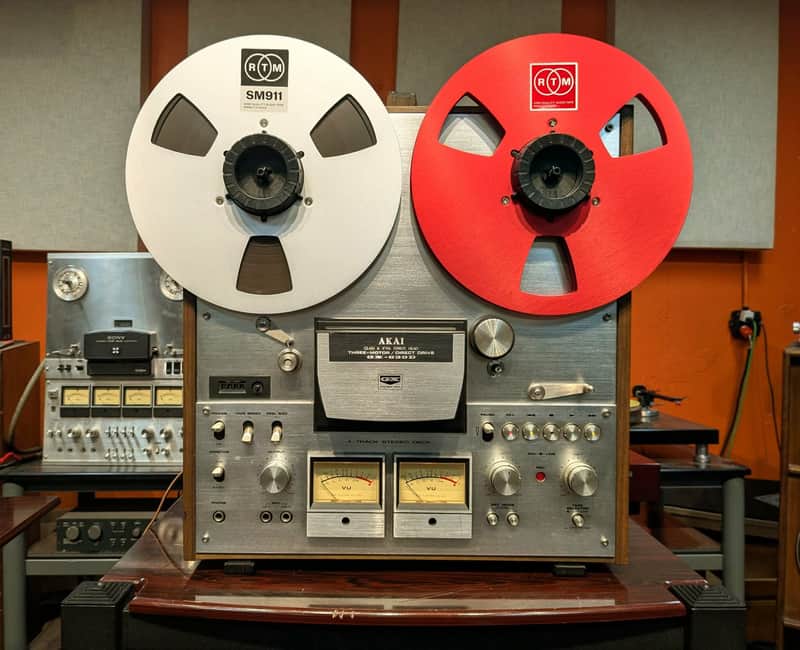
Akai GX-630D Stereo/Quadraphonic Reel To Reel Tape RecorderDescription: or sale is a lately serviced and fully operational Akai GX-630D. Work summary below. Every machine is tested thoroughly and competently for many an hour at our shop after servicing We do the majority of our business at our storefront in Rhode Island. We encourage you to make an appointment and hear the unit for yourself! Give us a ring at (401)-603-6881. Shipped promptly and competently-see our hundreds of positive feedback on our adept shipping methods. We encourage you to make an appointment and come and hear it through our system at the shop in the Rhode Island! You will fall in love with sound of this thing. We can reached at (401)-603-6881 should you have any questions at all. See our feedback as regards shipping-we use only first-rate materials and methods.WORK SUMMARY:-General transport maintenance and cleaning-New belts -Tape-path cleaned and cleared-Controls/swiches cleaned-Preamp section gone over for poor connections and poor componentsIncluded: (1) Reel

Our Thoughts RADAR AI

# Akai GX-630D Cassette Deck – Buyer Notes

This is a seller's market for vintage cassette decks right now; enthusiasts are actively hunting quality examples. At USD $1,500, this GX-630D sits well above your own comps (median USD $1,321, 75th percentile USD $1,411), making it a stretch ask. The model itself is solid—a three-head semi-pro machine from the '80s with decent transport and respectable specs—but USD $1,500 demands either mint condition, full service history, or included accessories like a remote or original packaging. Without those factors, expect pushback; similar decks typically land USD $1,200–$1,400 depending on cosmetics and function.

Before committing, verify the capstan and pinch roller aren't glazed or hardened (common failure point on aged Akais). Confirm all three heads are functional and demagnetized, test both directions under load, and listen for wow-and-flutter on a known tape. Ask whether the deck has been serviced recently—a fresh belt and lubrication add real value here. If it's original condition with original box, you have more leverage to justify the premium; if it's been sitting, that price needs to drop.

Independent perspective — not a price guarantee. Always verify condition, accessories and provenance before purchase.

About Akai

Akai Electric Company Ltd. traces its origins to Japan, founded by engineer Masukichi Akai in Tokyo around 1929, with his son Saburo Akai playing a key role in its early growth. Initially focused on affordable radio components, the firm formalized as a full electronics manufacturer post-World War II, often cited as 1946. By the mid-20th century, Akai had evolved into a prominent name in consumer audio, peaking in the 1970s before financial troubles led to its exit from the industry in 1991.

The brand built its legacy on high-quality tape-based audio gear, including reel-to-reel tape recorders, cassette decks, tuners, amplifiers, and complete stereo systems that brought professional-grade sound to homes. In the late 1980s, Akai Professional revolutionized music production with the MPC series—starting with the 1988 MPC60, co-designed by Roger Linn—integrating sampling, sequencing, and velocity-sensitive pads into compact workstations that defined hip-hop and electronic genres.

Today, Akai holds a revered vintage-collector status among hi-fi enthusiasts for its robust 1970s components, prized for their warm analog character and build quality. In the pro audio realm, the MPC line endures as an iconic, mid-to-high-end tool for beatmakers, with modern iterations sustaining the brand through licensing. While not a current leader in traditional hi-fi like amplifiers or speakers, its heritage appeals to savvy buyers seeking timeless reliability over fleeting trends.


See all Akai listings on RADAR.

More Akai listings