Kenwood KA-9100 1977-79
- Location
- US
- Source
- Reverb
- Posted
- 4 Apr 2026
- Last seen
- 1d ago
RADAR is a price search engine. We link to the original listing — we never sell direct. Transactions happen on the source site.
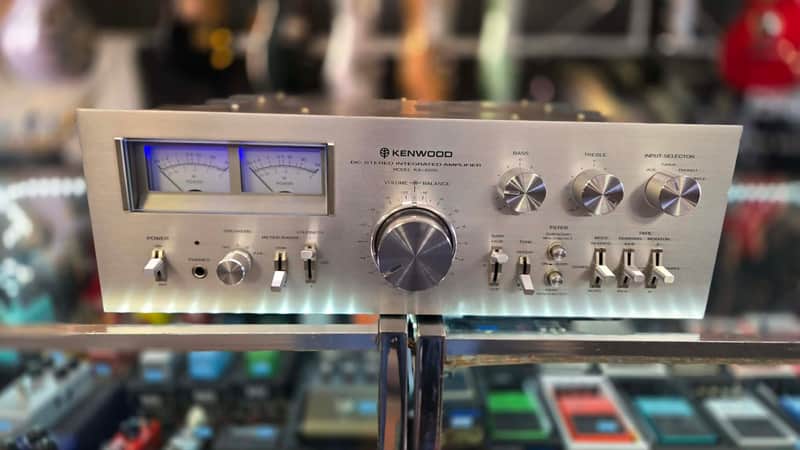
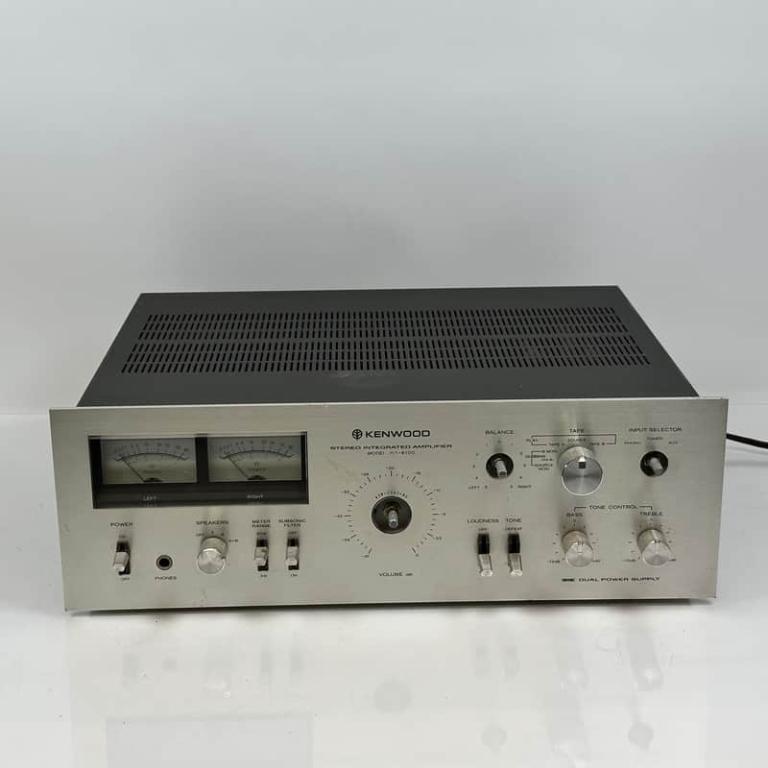
Restored Kenwood KA-9100 receiver. This unit has had any bad caps changed, all pots and switches cleaned and is working as it should with no issues. The only thing it does do is a very slight static sound when turning the volume up or down. The volume/balance control is a stacked potentiometer. They are almost impossible to find. No one that I know of is remaking that part so a good cleaning is about all you can do unless you want to try to rebuild the traces on the pots themselves. I have tried that on other pots over the years and it usually doesn't work out so well. Anyway, when using the receiver, the unit doesn't not make any static sounds when the volume is set, only sometimes when adjusting it to get the desired volume you want. The Kenwood KA-9100 is a classic DC-coupled integrated amplifier introduced in 1977. It is highly regarded by vintage audio enthusiasts for its "dual mono" design, featuring two large independent power transformers and three separate power supplies (one for each power amp channel and one for the preamp). Key SpecificationsPower Output: 90 watts per channel into 8 ohms; 110 watts per channel into 4 ohms.Frequency Response: 7Hz to 50kHz.Total Harmonic Distortion (THD): 0.03%.Damping Factor: 50.Inputs: Dual phono inputs, Aux, Tuner, and two tape loops.Weight: Approximately 16.7 kg (36.8 lbs). Design & FeaturesVisuals: Known for its brushed aluminum faceplate and two large, backlit analog power meters with adjustable sensitivity.Build Quality: Features high-quality tactile knobs and switches typical of the "silver-faced" era.DC Coupling: The amplifier is fully direct-coupled, which means it lacks output capacitors; this design aims to preserve bass clarity and prevent high-frequency roll-off. Market Value & Availability As of early 2026, market prices for the KA-9100 vary significantly based on condition and restoration status: General Range: Typically found between $301 and $958 on Reverb.Restored Units: High-end professionally restored and upgraded units can reach $2,400 to $4,000 at retailers like eBay or Reverb. Payment required within 24 hours. Buyer also pays shipping and insurance.I ship worldwide, please understand the shipping cost in an estimate and there may be additional cost for international shipping.Please ask all questions if you have any concerns prior to bidding.Please understand that if it is not in the description, then it is not included.Check out my other listings. New stuff added on a weekly basis.The Guitar Shop Phone Number 419-332-8788Shop hours, Wednesday, Thursday, Friday 12 to 6pm Saturday, 10 to 2pmClosed Sunday, Monday, Tuesday.International Shipping is a flat rate estimate. Subject to changeWe buy guitar, amp and pedal collections. Give us a call 419-332-8788Since my shop is closed on Sunday, Monday and Tuesday, if you purchase the item late on a Saturday and want it fast, let me know am I will try to get it sent out on a Monday, if you don't mind, then I will get it shipped out when I get back in my shop on Wednesday. Thanks
Condition unknown makes this a hard one to justify at US$2,000: that is well above the going used market for a KA-9100, which more often shows up around US$300-US$500 in unrestored or simply working shape, with restored examples generally landing closer to US$1,150 to US$1,650. At this ask, it looks ambitious to overpriced unless there’s documented full restoration, strong cosmetic condition, and proof of recent service.
It’s a genuinely respected late-’70s integrated amp, with strong power, a dual-mono-style layout, and the kind of build quality that made Kenwood’s silver-era gear famous. If this one is clean, original, and freshly recapped/aligned with receipts, the upside is real for a long-term keeper; otherwise, budget for age-related work before paying anywhere near this level.
Independent perspective — not a price guarantee. Always verify condition, accessories and provenance before purchase.
Kenwood traces its origins to December 21, 1946, when it was founded as Kasuga Radio Co. Ltd. in Komagane City, Nagano Prefecture, Japan, by a group of entrepreneurs led by William "Bill" Kasuga. Emerging in the postwar era, the company initially produced electronic components and amateur radio gear, renaming to Trio Corporation in 1960 before adopting the Kenwood name in 1986 to appeal to Western markets—blending "Ken," a familiar name across Japan and America, with "Wood" evoking durability and Hollywood. This rebranding fueled rapid international growth, starting with a U.S. office in Los Angeles County in 1963.
The brand built its legacy on high-quality audio and communications equipment, excelling in home hi-fi amplifiers like the acclaimed 1970 Supreme 1 multichannel model, receivers, tuners, and speakers with innovations such as polypropylene cones. Kenwood also pioneered car audio systems, including the first audio/video amplifier for home theater in 1981 and anti-theft cassette decks, alongside professional two-way radios and amateur transceivers. While maintaining roots in consumer electronics, it expanded into automotive infotainment.
Today, as part of JVCKENWOOD since the 2008 merger with JVC, Kenwood holds a solid mid-tier position in car audio and professional communications, prized by enthusiasts for reliable performance and aftermarket upgrades. Its vintage home hi-fi gear from the 1970s and 1980s commands respect among collectors for robust build and warm sound, though it no longer dominates pure hi-fi markets.

See all Kenwood listings on RADAR.