BETA
RADAR is in beta — expect errors. Accuracy and coverage improvements are shipping daily.
LIVE
Waiting for new listings…
0 other audiophiles online

Seller's Description

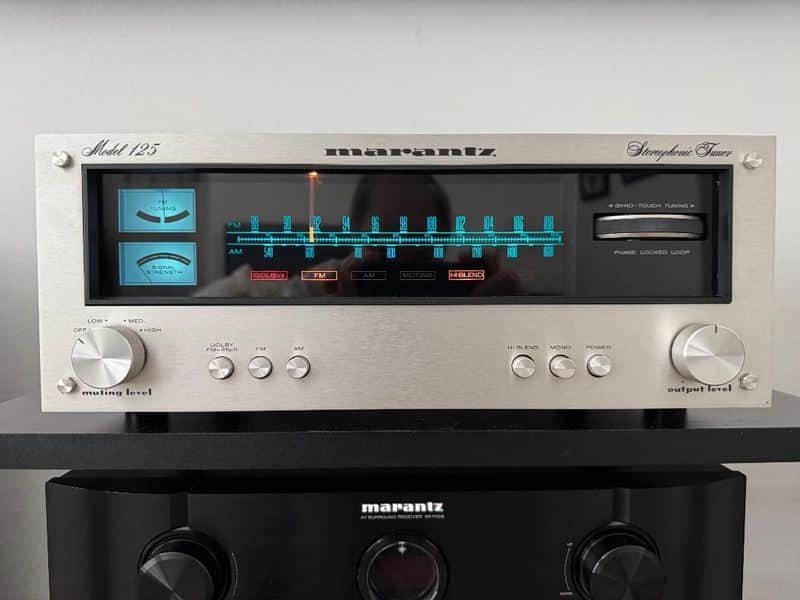
ConditionUsed - like newReal clean unit, condition rating maybe 8.5. All the panel lamps work as do the pushbuttons and potentiometers. The lamps are the original type, not LEDs. Good reception on both AM and FM. Audio sounds clear, no distortion. Type: Mono/Stereo Tuner Tuning Bands: FM, MW Tuning Scale: Analogue FM Tuning Range: 88 to 108 MHz MW Tuning Range: 515 to 1650 kHz Sensitivity: 1.9uV (FM), 20uV (MW) Signal to Noise Ratio: 60dB (FM), 50dB (MW) Distortion: 0.3% (FM), 1% (MW) Selectivity: 85dB (FM), 45dB (MW) Frequency response: 30Hz to 15kHz (FM), 50Hz to 2.5kHz (MW) Dimensions: 15-3/8 x 5-3/4 x 11-7/8 inches Weight: 17.2lbs

Our Thoughts RADAR AI

Timing matters here because this is a 1970s piece from an era before the later, more feature-packed Marantz generations, so value is mostly about condition and originality rather than specs. At US$685, it lands below the US$676 25th percentile? No—the asking price is actually just above that floor, but still comfortably below the US$873 median and well under the US$1,024 75th percentile, so it reads as a strong buy in the current used market.

That makes it especially appealing if it’s genuinely like new: clean cosmetics, unmolested internals, and no sign of hack repairs are exactly what you want with a 1970s Marantz. The upside is the usual one with these classics—warm, satisfying presentation, strong resale interest, and real collector appeal if it’s an honest survivor. At this price, I’d be focused on service history, matching knobs/faceplate, and whether all functions are quiet and stable, but nothing here suggests a hard pass.

Independent perspective — not a price guarantee. Always verify condition, accessories and provenance before purchase.

About Marantz

Marantz originated in the United States, founded in 1953 by Saul Bernard Marantz, a music enthusiast and amateur musician born in Brooklyn in 1911. Dissatisfied with the audio equipment of the era, he crafted the groundbreaking Audio Consolette preamplifier in 1952 from his New York home, selling the first 100 units rapidly and prompting the formal establishment of the company in Woodside, Queens. Though production later shifted to Japan in partnership with manufacturers like Standard Radio in 1966, and the brand evolved through ownership changes including Superscope and eventual integration into larger groups, its heritage remains rooted in American ingenuity and a relentless pursuit of musical fidelity.

The brand excels in high-end audio components, particularly amplifiers, preamplifiers, and integrated systems that defined its golden era. Iconic models like the Model 7 preamplifier (1958), Model 9 power amplifier (1960), and Model 10B tuner (1964) set benchmarks for performance, while later offerings expanded to tuners, receivers, and CD players. Marantz briefly ventured into speakers under designer Ed May in the 1970s but focused primarily on electronics rather than turntables, headphones, DACs, or cables, emphasizing separates renowned for their "Most Musical Sound."

Marantz commands a premium position in the hi-fi market, revered as a high-end pioneer that shaped the audiophile landscape through the 1970s zenith. Today, it blends vintage allure with modern elegance, appealing to discerning buyers who value durability, innovation, and warm, detailed sound signatures over mass-market accessibility.


See all Marantz listings on RADAR.

More 1970’s listings