LIVE
Waiting for new listings…
0 other audiophiles online

Seller's Description

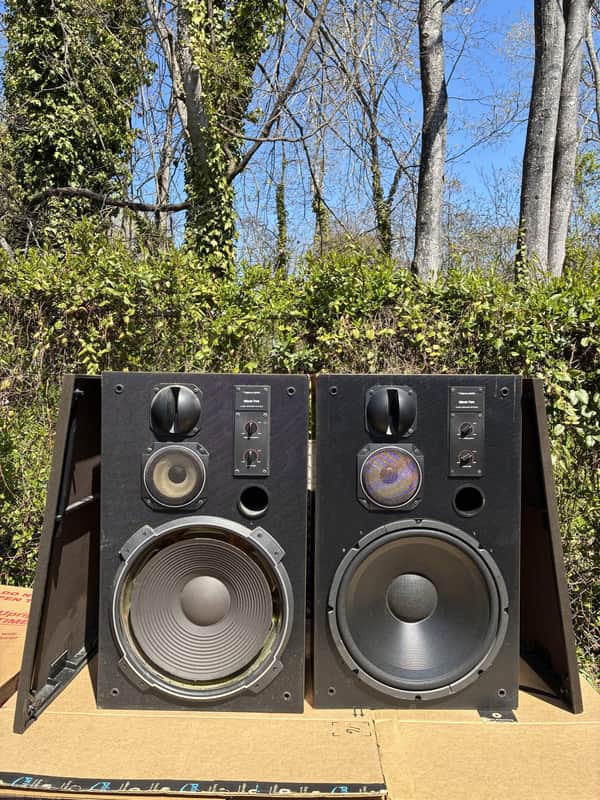
The one speaker needs to be fully re-foamed now for this one I only tested it on the lowest volume possible & the tweeter mid & woofer seemed to be okayThe other speaker which is the one you hear in the video I played at a very higher volume & it sounded great, looks to have been already re-foamed. One of the grille covers one of the plastic corner brackets broke also the logoWill be shipped in 2 boxes both speakers fully bubble wrapped in many layers, local pickup in Pleasantville NJ is available for discount.

Our Thoughts RADAR AI

At USD$525 for a pair, you're looking at a fair-to-slightly-optimistic ask for 1984 Realistic Mach Twos in unknown condition. These were solid mid-tier Radio Shack speakers with genuine credentials—160W handling, 94dB efficiency, and a respectable 25Hz–40kHz spec sheet. Used pairs typically move in the USD$300–450 range depending on cosmetics and driver condition, so this listing sits above the casual buyer sweet spot but not outrageous if the cabinets are clean and the drivers are original and functional.

Before committing, verify that all three drivers per speaker (woofer, midrange, tweeter) are intact and responsive—foam rot on the 381mm woofers is common at 40+ years old, and replacement drivers aren't trivial to source. Check the level controls on the midrange and tweeter for crackling or dead zones. Confirm both crossovers are present and undamaged, and that you're getting the original speaker cables. If any drivers have been reconed or replaced with non-original units, negotiate down accordingly.

Independent perspective — not a price guarantee. Always verify condition, accessories and provenance before purchase.

About Realistic

Realistic emerged as the house brand of Radio Shack, founded in Boston in 1921 by two brothers to serve ham radio enthusiasts and ship radio operators. The company entered the high-fidelity market in 1947 with the nation's first audio showroom for comparing amplifiers, speakers, and turntables. In 1954, Harman Kardon proposed private-label gear under the name "Realist," but a lawsuit from the Realist Camera Company prompted a swift rebrand to Realistic, which Radio Shack used until 2000 after Tandy Corporation's acquisition.

Realistic spanned a broad array of consumer audio categories, including amplifiers like the "Little Jewel" series, speakers manufactured initially by Tandy in Texas and later by Japan's Sun, turntables, reel-to-reel and 8-track tape recorders, plus CB radios and accessories. The lineup emphasized accessible hi-fi components, often sourced from reputable OEMs, alongside entry-level hobbyist gear that filled Radio Shack catalogs and stores.

Positioned as a mid-tier, budget-friendly option, Realistic earned a devoted following among 1970s audiophiles for reliable performance at mass-market prices, though it never rivaled high-end marques like Dynaco or McIntosh, which Radio Shack also stocked. Today, it holds strong vintage-collector appeal for its nostalgic role in democratizing hi-fi, with survivors prized for modifiable circuits and sturdy builds despite the brand's discontinuation.


See all Realistic listings on RADAR.

More Realistic listings