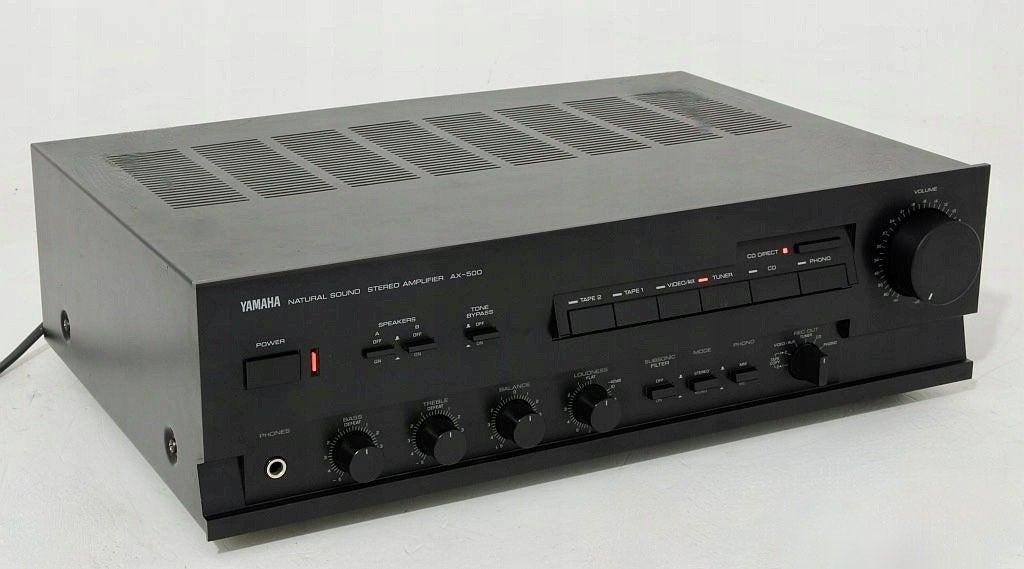
Yamaha stands as one of the world's most storied audio manufacturers, with roots extending far beyond consumer electronics. Founded in 1887 by Torakusu Yamaha in Hamamatsu, Japan, the company began as a reed organ manufacturer before expanding into pianos and eventually becoming a comprehensive musical instrument maker. This deep heritage in acoustics and materials science would prove foundational to its later audio ventures. The company operated under its original name, Nippon Gakki Co., Ltd., until 1987, when it was renamed Yamaha Corporation in honor of its centennial.
Yamaha's entry into high-fidelity audio proved transformative for the industry itself. In 1954, the company released the Yamaha Hi-Fi Player, widely recognized as the world's first audio component to bear the "Hi-Fi" designation in its name. The company subsequently built a comprehensive product portfolio spanning amplifiers—beginning with the acclaimed A-100 in 1960—speakers, turntables, and digital audio equipment. The NS-1000 speakers, introduced in 1974 with beryllium drivers, became iconic reference monitors. Yamaha also pioneered digital audio technology, shipping the world's first CD recorder in 1988.
Today, Yamaha occupies a distinctive position as a mid-to-high-end generalist rather than a niche specialist. The brand commands respect among both casual listeners and serious audiophiles, balancing accessibility with genuine engineering credibility. Its reputation rests on six decades of consistent innovation, proven reliability, and the unique advantage of applying musical instrument expertise to audio reproduction. Vintage Yamaha components remain highly sought by collectors, while current products maintain the brand's tradition of delivering performance and durability across multiple price tiers.