Mitsubishi Electric, the Japanese powerhouse behind the Mitsubishi hi-fi brand, traces its audio heritage to the post-World War II era, with roots in the company's founding in 1921 as part of the broader Mitsubishi conglomerate. The brand's dedicated audio division gained prominence through its Diatone subsidiary, established post-1945 at the Ofuna factory, where engineers pioneered innovative loudspeakers from recycled materials amid Japan's reconstruction. This era marked Mitsubishi's entry into consumer audio, blending industrial precision with a commitment to sonic excellence.
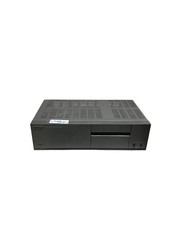
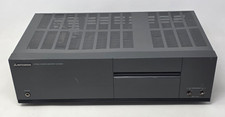
The brand focused on complete hi-fi systems and standalone components, excelling in integrated setups like the 1984 Intelligent Audio System—a visionary ensemble featuring a digitally controlled LT-45P turntable, DP-45P CD player, DT-45P cassette deck, DA-R45P receiver, and SS-62P speakers, all unified by a pioneering infrared System Commander remote. Earlier efforts included Diatone speakers and radios, while the 1980s saw forays into digital audio with ProDigi reel-to-reel recorders and early CD technology, emphasizing turntables, cassette decks, receivers, and full-range loudspeakers over niche categories like headphones or cables.
Today, Mitsubishi occupies a niche vintage-collector space rather than an active high-end market contender. Revered by enthusiasts for its forward-thinking Japanese engineering and robust build—evident in the hefty, interdependent designs—the brand evokes 1980s innovation but remains obscure in modern lineups, appealing primarily to those chasing rare, integrated relics of analog-digital transition.