BETA
RADAR is in beta — expect errors. Accuracy and coverage improvements are shipping daily.
LIVE
Waiting for new listings…
0 other audiophiles online

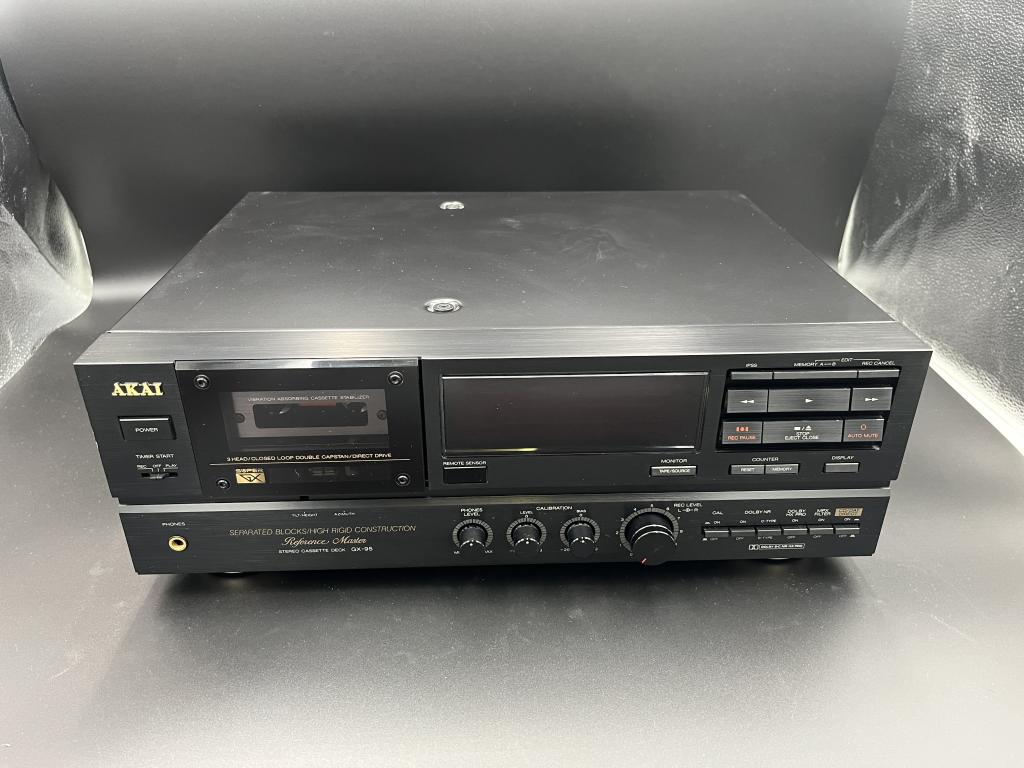
Seller's Description

Biete das Tapedeck zum Verkauf an. Es funktioniert fast vollständig. Das Zurückspulen geht nur, wenn die Taste nicht ganz gedrückt ist. Kann gerne vor Ort Probe gehört werden.

Technische Daten:
Gerätetyp: Stereo-Kassettendeck (Frontlader)
Baujahr: ca. 1980
Tonköpfe: 2 (1 × Aufnahme/Wiedergabe, 1 × Löschkopf)
Spursystem: 4-Spur, 2-Kanal Stereo
Bandgeschwindigkeit: 4,76 cm/s
Motor: Elektronisch geregelter DC-Motor
Unterstützte Bandtypen: Typ I (Normal), Typ II (Chromdioxid), Typ IV (Metall)
Rauschunterdrückung: Dolby B
Frequenzgang: 30 Hz – 18 kHz (mit Metallband)
Signal-Rausch-Abstand: 70 dB (mit Dolby B)
Gleichlaufschwankungen (Wow & Flutter): 0,06 %
Klirrfaktor (THD): 0,8 %
Line-Eingang: 70 mV
Mikrofoneingang: 0,25 mV
Line-Ausgang: 0,41 V
Abmessungen (B × H × T): 440 × 150 × 290 mm
Gewicht: ca. 8 kg

Privatverkauf, ohne Rücknahme oder Gewährleistung

Our Thoughts RADAR AI

At €180, this Akai CS-M40R is sharply overpriced compared to the typical used market, where identical units regularly sell for €60–€90. Even accounting for the “excellent” condition noted, the asking price sits well above the 75th percentile and lacks justification.

The CS-M40R is a solid, straightforward cassette deck known for easy repairability and reliable performance, but its low-end vintage status means it rarely commands premium prices. Unless this listing includes rare original accessories, a full service history, or is from a verified original owner with pristine documentation, there’s no meaningful upside to justify €180. For a fellow enthusiast, this is a avoidable deal; similar decks in good condition are available for half that price.

Independent perspective — not a price guarantee. Always verify condition, accessories and provenance before purchase.

About Akai

Akai Electric Company Ltd. traces its origins to Japan, founded by engineer Masukichi Akai in Tokyo around 1929, with his son Saburo Akai playing a key role in its early growth. Initially focused on affordable radio components, the firm formalized as a full electronics manufacturer post-World War II, often cited as 1946. By the mid-20th century, Akai had evolved into a prominent name in consumer audio, peaking in the 1970s before financial troubles led to its exit from the industry in 1991.

The brand built its legacy on high-quality tape-based audio gear, including reel-to-reel tape recorders, cassette decks, tuners, amplifiers, and complete stereo systems that brought professional-grade sound to homes. In the late 1980s, Akai Professional revolutionized music production with the MPC series—starting with the 1988 MPC60, co-designed by Roger Linn—integrating sampling, sequencing, and velocity-sensitive pads into compact workstations that defined hip-hop and electronic genres.

Today, Akai holds a revered vintage-collector status among hi-fi enthusiasts for its robust 1970s components, prized for their warm analog character and build quality. In the pro audio realm, the MPC line endures as an iconic, mid-to-high-end tool for beatmakers, with modern iterations sustaining the brand through licensing. While not a current leader in traditional hi-fi like amplifiers or speakers, its heritage appeals to savvy buyers seeking timeless reliability over fleeting trends.


See all Akai listings on RADAR.

More CS-M40R listings