LIVE
Waiting for new listings…
0 other audiophiles online

Seller's Description

Hi,

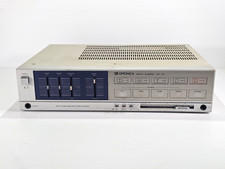
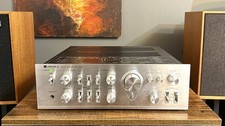
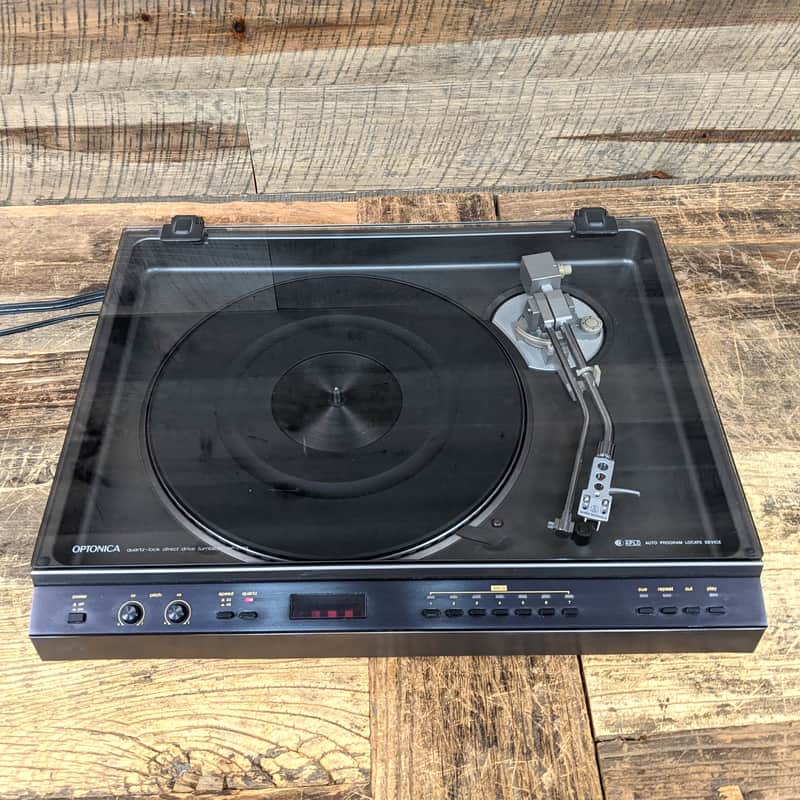
ich biete euch diese tollen Geräte an, die auf den Bildern gut dargestellt wurden.

Verkauft werden die Geräte wie auf den Bildern zu sehen ohne weiteres dazu.

Zustand Gut - Sehr Gut.
Beide Geräte sind Vollfunktionsfähig.

Einzelverkauf ist möglich, sofern das Angebot gut ist.

Mein Preis ist für beide Geräte.

Ich bevorzuge eine Abholung in 67346 Speyer.

Versand versichert mit Sendenummer möglich kostet dann 15,50€.

Privatverkauf!
Keine Garantie oder Gewährleistung.
Gekauft wie gesehen oder beschrieben.

Our Thoughts RADAR AI

Should you jump on it at €145? Yes — that’s a fair-to-good asking price for a working SM-5100, sitting around the going range rather than inflated, and it doesn’t feel overpriced for a clean vintage integrated. Comparable listings have floated roughly in the €100–€135 neighborhood for rougher or lower-confidence examples, with complete working units often asking a bit more.

What makes it appealing is the usual Optonica draw: solid late-70s/early-80s build, a straightforward 35W-class integrated layout, and a sound that tends to favor musical, easy listening over flash. If it’s been serviced, or at least checked for noisy controls and stable bias/DC offset, this is the kind of sleeper buy that rewards a careful enthusiast. At this price, condition and originality matter more than chasing a bargain-basement number.

Independent perspective — not a price guarantee. Always verify condition, accessories and provenance before purchase.

About Optonica

# Optonica

Optonica was a high-end audio subdivision of Sharp Corporation, the Japanese electronics manufacturer. Launched in 1975 (with some sources citing 1976), the brand was created to compete directly with established premium audio makers including Pioneer, Yamaha, Sansui, Nakamichi, and Marantz during the golden age of hi-fi. Sharp designed, built, and marketed Optonica products entirely in Japan, positioning the line as a serious contender in the luxury stereo market.

The brand's product portfolio centered on integrated amplifiers, receivers, and complete stereo systems aimed at discerning audiophiles. Optonica equipment was engineered to deliver high-fidelity sound reproduction across the mid-to-high power range, with models typically rated between 40 and 60 watts per channel. The brand maintained a focused approach, concentrating on core audio components rather than diversifying across numerous product categories.

Optonica's tenure in the high-end audio market proved relatively brief, effectively ending by 1982 as a serious competitor. The brand was revived in 1988 as a consumer electronics line encompassing stereo television receivers, VCRs, portable cassette players, and surround-sound receivers, but this iteration lacked the prestige of the original audio division. Production ceased entirely by 1991. Today, Optonica equipment from the late 1970s and early 1980s holds appeal among vintage audio collectors and enthusiasts seeking well-engineered Japanese hi-fi from that era.


See all Optonica listings on RADAR.

More SM-5100 listings