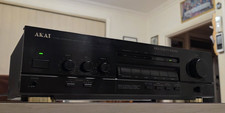
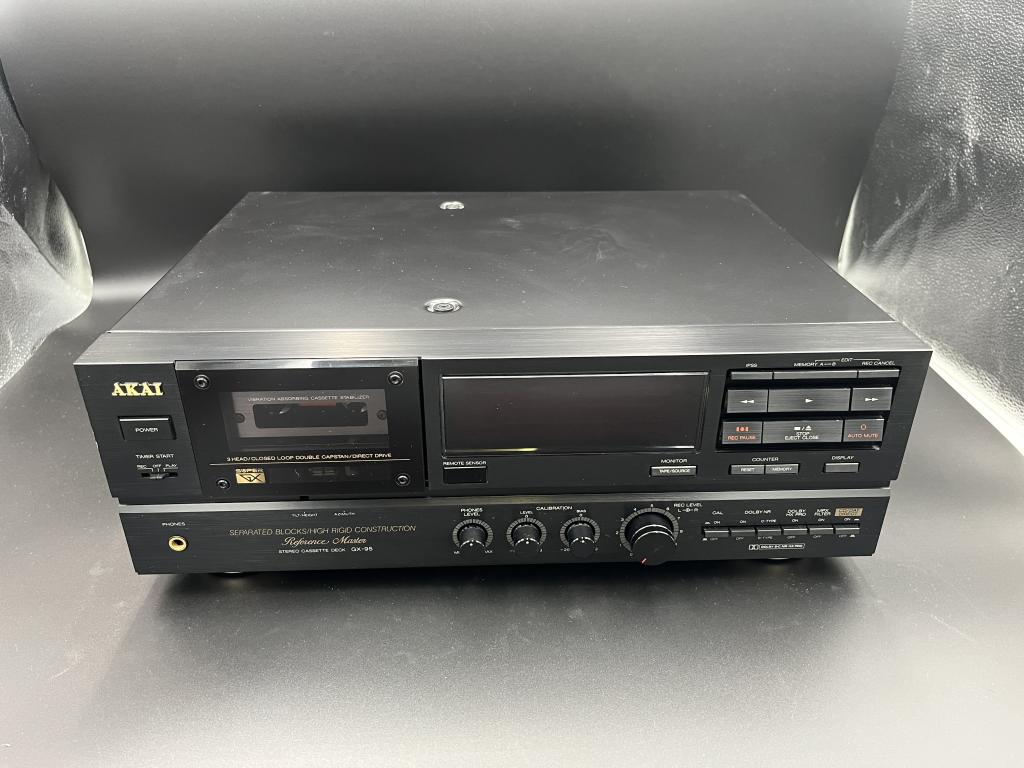
AKAI AA R21L auch für Tonbandgerät
- Location
- Kr. München, DE
- Source
- Kleinanzeigen
- Posted
- 13h ago
- Last seen
- 9h ago
RADAR is a price search engine. We link to the original listing — we never sell direct. Transactions happen on the source site.
AKAI AA R21LAKAI AA R21L
Receiver mit PHONO und Tonbandgerät eingängen.
Alles funktioniert sauber.
Ansonsten alles in einem relativ gutem Zustand. Eines meiner Sammlergeräte. 1975!
Die Front sieht wirklich noch super aus, keine Kratzer, die Schriften sind scharf - also wenig benutzt da kein Abrieb,.. usw. siehe Bilder.
Mit dem Handbuch, dem Service Handbuch, Schaltungen,
Versand zuzüglich 20,- für Chips, Karton, Porto und Transport.
Gerne Besichtigung und Kontrolle.
KEINE VB !!!!
PRIVATVERKAUF OHNE WEITERE GARANTIE , KEINE RÜCKNAHMEN!
Weitere Details unter hifiwiki.de
The AA-R21L is a modest but well-liked early-’80s Akai stereo receiver, not a speaker, and that distinction matters here. At EUR 150, the asking price looks ambitious: observed examples and buy-it-now listings sit closer to roughly EUR 30–EUR 110, with EUR 150 only making sense for an unusually clean, fully serviced example.
Its appeal is the straightforward, nicely built Japanese receiver format: a useful AM/FM tuner, phono input, sensible controls, and around 26–30 watts per channel—enough for efficient compact speakers in a small room. The tuner and clean, clear presentation are genuine strengths. Before paying this much, insist on a proper demonstration: both channels, phono, tuner, controls, lamps, and protection relay should all work quietly. As listed, EUR 150 is a pass unless condition and servicing are exceptional.
Independent perspective — not a price guarantee. Always verify condition, accessories and provenance before purchase.
Akai Electric Company Ltd. traces its origins to Japan, founded by engineer Masukichi Akai in Tokyo around 1929, with his son Saburo Akai playing a key role in its early growth. Initially focused on affordable radio components, the firm formalized as a full electronics manufacturer post-World War II, often cited as 1946. By the mid-20th century, Akai had evolved into a prominent name in consumer audio, peaking in the 1970s before financial troubles led to its exit from the industry in 1991.
The brand built its legacy on high-quality tape-based audio gear, including reel-to-reel tape recorders, cassette decks, tuners, amplifiers, and complete stereo systems that brought professional-grade sound to homes. In the late 1980s, Akai Professional revolutionized music production with the MPC series—starting with the 1988 MPC60, co-designed by Roger Linn—integrating sampling, sequencing, and velocity-sensitive pads into compact workstations that defined hip-hop and electronic genres.
Today, Akai holds a revered vintage-collector status among hi-fi enthusiasts for its robust 1970s components, prized for their warm analog character and build quality. In the pro audio realm, the MPC line endures as an iconic, mid-to-high-end tool for beatmakers, with modern iterations sustaining the brand through licensing. While not a current leader in traditional hi-fi like amplifiers or speakers, its heritage appeals to savvy buyers seeking timeless reliability over fleeting trends.

See all Akai listings on RADAR.