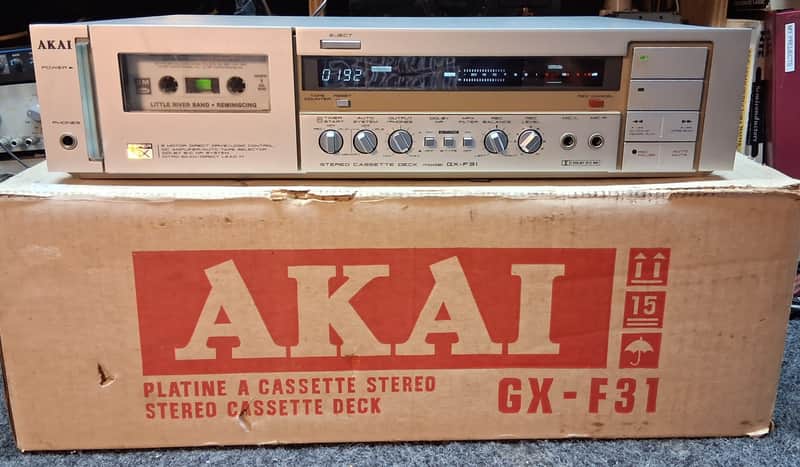
Akai GX-F31 1982 - Silver
- Location
- US
- Source
- Reverb
- Posted
- 28 Apr 2026
- Last seen
- 3d ago
RADAR is a price search engine. We link to the original listing — we never sell direct. Transactions happen on the source site.
Fully restored calibrated Akai gx- F31 cassette deck. All belts replace drive system cleaned and lubricated. Tape speed adjusted. Heads and tape path cleaned and magnetized prior to full audio calibration I will gladly answer any questions. Comes in original box. I will gladly answer any questions
At US$350, this Akai GX-F31 asking price is nearly double the current market, where tested units regularly sell for around US$180. This listing sits well above the 75th percentile for this model, making it an ambitious price rather than a fair deal or bargain. Unless the seller specifies pristine original-owner condition, full accessories, or a documented recent service, the US$350 figure is hard to justify against the typical used range of US$160–US$200.
The GX-F31 is a respected 1982–1985 direct-drive deck known for its reliable Super GX Rewind and solid performance with high-bias tapes. It’s a worthwhile buy when priced near US$180, offering vintage Akai toughness and clean playback without the head-wear issues of some belt-driven rivals. However, at US$350, the upside disappears unless the deck is in exceptional, fully restored condition with original box and manuals—otherwise, it’s better to wait for a listing closer to market value.
Independent perspective — not a price guarantee. Always verify condition, accessories and provenance before purchase.
Akai Electric Company Ltd. traces its origins to Japan, founded by engineer Masukichi Akai in Tokyo around 1929, with his son Saburo Akai playing a key role in its early growth. Initially focused on affordable radio components, the firm formalized as a full electronics manufacturer post-World War II, often cited as 1946. By the mid-20th century, Akai had evolved into a prominent name in consumer audio, peaking in the 1970s before financial troubles led to its exit from the industry in 1991.
The brand built its legacy on high-quality tape-based audio gear, including reel-to-reel tape recorders, cassette decks, tuners, amplifiers, and complete stereo systems that brought professional-grade sound to homes. In the late 1980s, Akai Professional revolutionized music production with the MPC series—starting with the 1988 MPC60, co-designed by Roger Linn—integrating sampling, sequencing, and velocity-sensitive pads into compact workstations that defined hip-hop and electronic genres.
Today, Akai holds a revered vintage-collector status among hi-fi enthusiasts for its robust 1970s components, prized for their warm analog character and build quality. In the pro audio realm, the MPC line endures as an iconic, mid-to-high-end tool for beatmakers, with modern iterations sustaining the brand through licensing. While not a current leader in traditional hi-fi like amplifiers or speakers, its heritage appeals to savvy buyers seeking timeless reliability over fleeting trends.

See all Akai listings on RADAR.