BETA
RADAR is in beta — expect errors. Accuracy and coverage improvements are shipping daily.
LIVE
Waiting for new listings…
0 other audiophiles online

Seller's Description

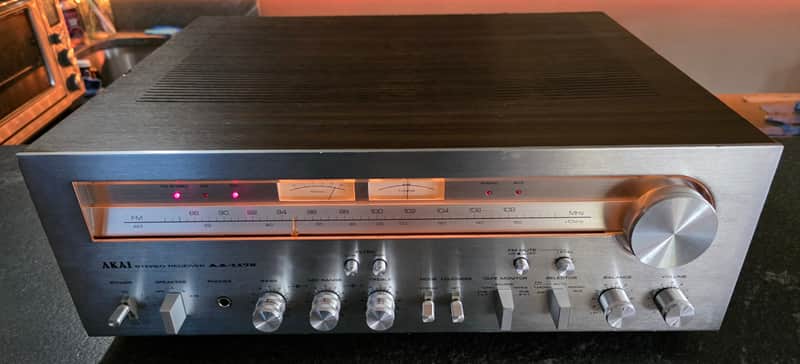
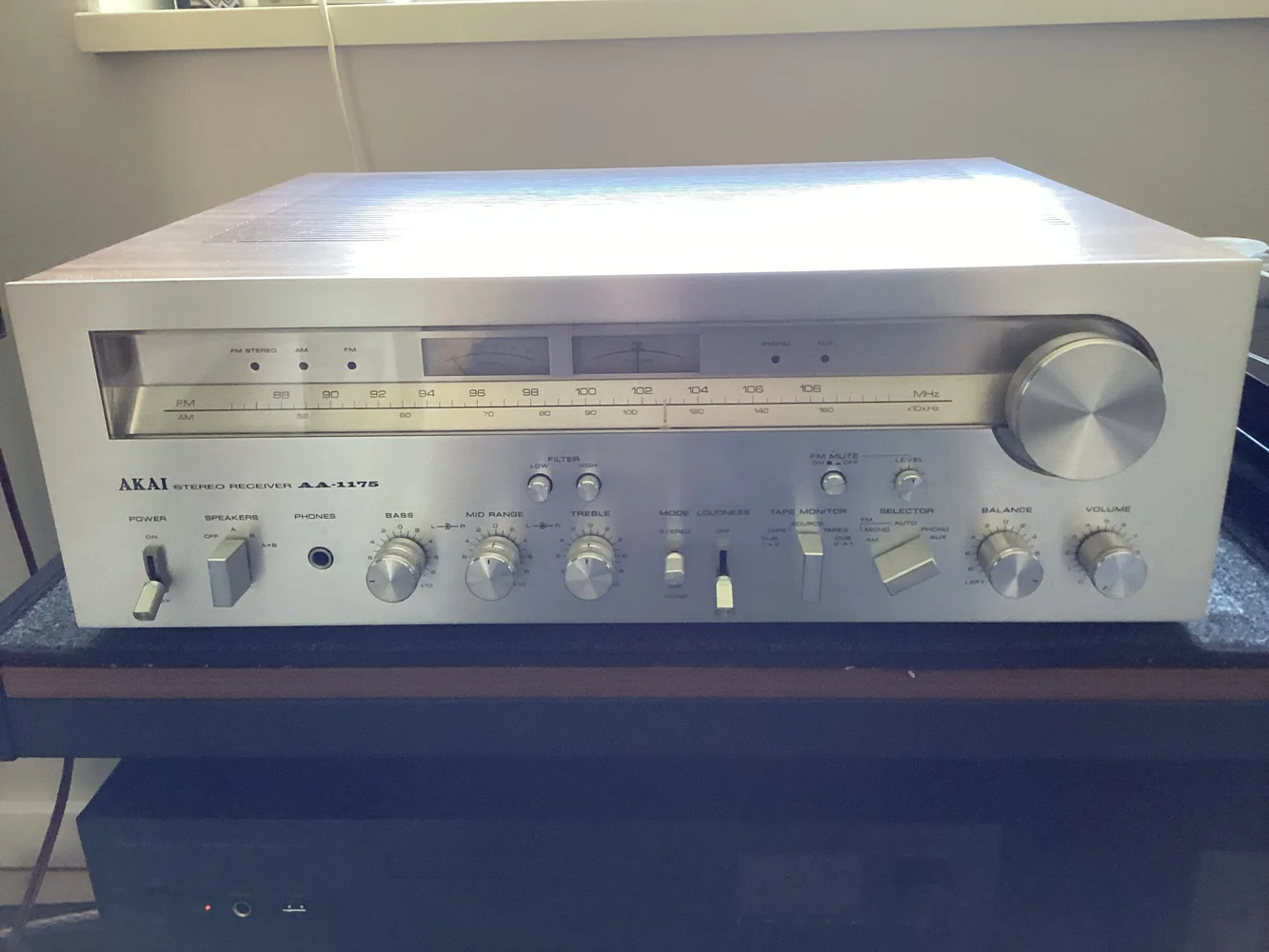
This is a rare Akai AA-1175 receiver. The Akai AA-1175 receiver is 75 watts per channel into 8Ω and will power speakers at 4Ω nearly doubling it's wattage per channel. It is dual powered meaning the Akai AA-1175 receiver has a separate power supplies for left and right channels. With dual power supplies, each channel can operate independently, reducing crosstalk and signal bleed between channels. This separation allows for more precise sound staging and clarity.Here is a little information on the work performed on the Akai AA-1175 receiver dated April 2, 2026. There were loose solder joints resoldered. FM/AM tuner needle aligned. New main filter capacitors were installed. Recapped driver board. Replaced TO220 style NTE398 TXs. Checked bias and offsets. Resurfaced protection relay. Cleaned and lubricated all controls. The interior has been cleaned. The exterior has been cleaned and polished. There was a lot of work done to it which took quite a bit of time, but it was well worth it. Even though the wood case shows some wear it is still very presentable. The brushed aluminum face has a few dents on the edges but nothing major. The face itself has a few very minor blemishes that go unnoticed. The large tuner knob and a couple other knobs have some scratches. The Akai AA-1175 receiver sounds amazing. Take a look at the pictures and feel free to contact me with questions or concerns.I use UPS for shipping. All packaging product is new and usually includes a heavy duty box with the interior lined with Pink Panther foam. The product is wrapped in bubble wrap and peanuts may be used but inside a zip lock bag. I package the gear with the thought of myself buying the product and how I would expect to receive it at my door step.

Our Thoughts RADAR AI

Timing matters here because this is a late-1970s flagship-era receiver, not a modern AV piece, so value is mostly about condition and originality rather than features. At US$900, the ask looks ambitious versus typical used market evidence; comparable vintage Akai receiver listings are showing around US$400–US$550 territory, with a clean AA-1175 example listed at about US$420 equivalent after conversion.

What makes it appealing is the dual-mono, high-output design and the strong reputation these Akai top models have for build quality, separated power supplies, and a big, authoritative presentation. If it’s truly original, serviced, and cosmetically excellent, that adds real collector appeal, but at this price I’d want proof of recent bench work, solid FM performance, and no scratchy controls or tired lamps before paying up.

Independent perspective — not a price guarantee. Always verify condition, accessories and provenance before purchase.

About Akai

Akai Electric Company Ltd. traces its origins to Japan, founded by engineer Masukichi Akai in Tokyo around 1929, with his son Saburo Akai playing a key role in its early growth. Initially focused on affordable radio components, the firm formalized as a full electronics manufacturer post-World War II, often cited as 1946. By the mid-20th century, Akai had evolved into a prominent name in consumer audio, peaking in the 1970s before financial troubles led to its exit from the industry in 1991.

The brand built its legacy on high-quality tape-based audio gear, including reel-to-reel tape recorders, cassette decks, tuners, amplifiers, and complete stereo systems that brought professional-grade sound to homes. In the late 1980s, Akai Professional revolutionized music production with the MPC series—starting with the 1988 MPC60, co-designed by Roger Linn—integrating sampling, sequencing, and velocity-sensitive pads into compact workstations that defined hip-hop and electronic genres.

Today, Akai holds a revered vintage-collector status among hi-fi enthusiasts for its robust 1970s components, prized for their warm analog character and build quality. In the pro audio realm, the MPC line endures as an iconic, mid-to-high-end tool for beatmakers, with modern iterations sustaining the brand through licensing. While not a current leader in traditional hi-fi like amplifiers or speakers, its heritage appeals to savvy buyers seeking timeless reliability over fleeting trends.


See all Akai listings on RADAR.

More AA-1175 listings